In 1925, a group of businessmen and legislators gathered in Washington D.C. to solve a simple problem: shipping disputes. Merchants were tired of their cargo rotting in ports while they waited months for a judge to settle a contract disagreement. They wanted a way to resolve professional spats quickly, privately, and efficiently. They called it the Federal Arbitration Act (FAA). It was designed as a handshake agreement between equals: sophisticated parties who knew the risks and wanted to stay out of the courthouse.
They never imagined that a century later, this narrow, commerce-focused law would be weaponized to strip millions of Americans of their constitutional rights. What began as a tool for maritime merchants has been transformed into a shadow justice system where the rules of evidence don’t apply, there is no meaningful right to appeal, and the “judges” are often paid by the very corporations and institutions they are supposed to police. This is the story of how the courthouse doors were quietly locked from the inside, and how ordinary Americans from nursing home residents to workers, consumers, and heirs found themselves trapped in a rigged game.
The 7th Amendment to the U.S. Constitution is not a suggestion. It states clearly: “In Suits at common law, where the value in controversy shall exceed twenty dollars, the right of trial by jury shall be preserved.” The Founders intended this right to be “inviolate.” They believed that the jury box was the last line of defense against tyranny, a place where ordinary citizens could hold the powerful accountable. But in the modern legal landscape, that promise has been hollowed out. Through a series of calculated maneuvers, the legal profession has replaced the jury box with a conference room table, and the public trial with a secret proceeding.
The transformation didn’t happen overnight. It was a slow, judicial coup that turned the FAA into a “super-statute.” For decades, the courts recognized that arbitration was a choice. But starting in the 1980s, the Supreme Court began a radical shift, interpreting the FAA not just as a procedural tool for businesses, but as a national policy that favors private arbitration over your constitutional right to a day in court.
The path to this modern nightmare was paved by five key Supreme Court decisions that effectively dismantled the 7th Amendment. In 1984, the case of Southland Corp. v. Keating declared that the FAA applied even in state courts, overriding state laws designed to protect consumers. Three years later, in Shearson/American Express v. McMahon, the Court ruled that even complex fraud and racketeering claims: cases that absolutely require the transparency of a public trial: could be buried in private arbitration.
By 1991, the Gilmer v. Interstate/Johnson Lane Corp. decision expanded this reach into the workplace, allowing employers to force workers to waive their right to sue for age discrimination. The final nails in the coffin came more recently. In 2011, AT&T Mobility v. Concepcion essentially killed class-action lawsuits, allowing companies to force customers into one-on-one arbitration where the cost of fighting a small overcharge is more than the refund itself. Finally, in 2018, Epic Systems Corp. v. Lewis confirmed that companies could force individual arbitration even when workers try to band together to fight wage theft.
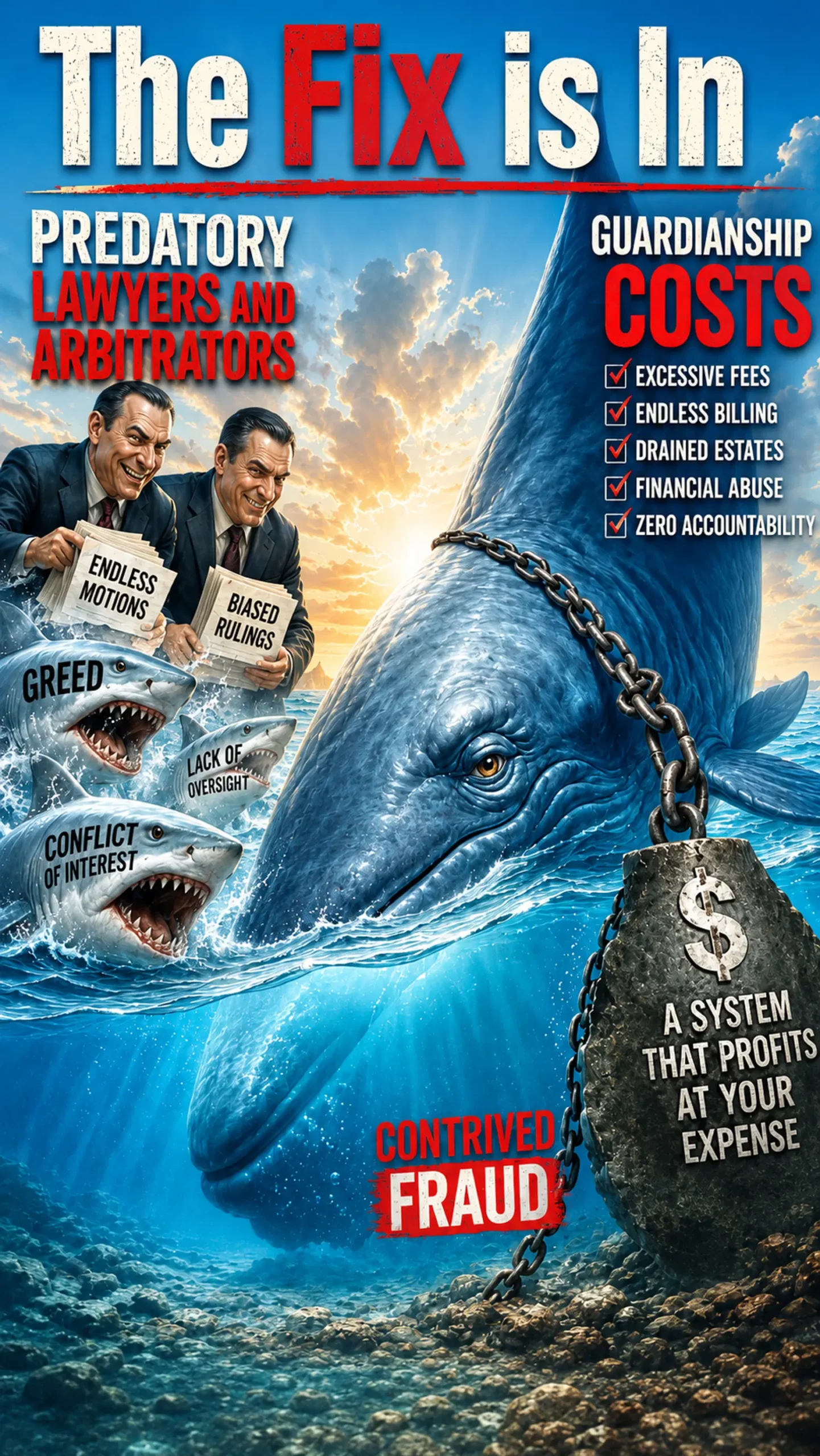
This judicial evolution has created what Wayne Dolcefino calls a “sham forum.” It is a system designed by lawyers, for lawyers, where the stench of cronyism is inescapable, as detailed in Wayne Dolcefino’s Damn Lawyers series. The pattern is not regional and it is not rare. It reaches from consumer contracts to employment disputes, from elder care to probate, wherever fine print can be used to bury a citizen’s right to stand before a jury. The larger record is collected at DamnLawyers.com.
The modern nightmare is not hard to trace. In Pennsylvania, the notorious kids-for-cash scandal exposed judges who helped turn children into revenue streams. In Philadelphia, federal prosecutors uncovered a pay-to-play culture in which judicial influence and political money traveled too close for comfort. In Bexar County, longtime complaints about insider dealing and courthouse favoritism fed the same public suspicion: that justice too often bends toward the well-connected. Different facts, different states, same rotten odor. Once public trust is traded for private advantage, the legal system stops looking like justice and starts looking like a market. That same market logic shows up when families report being pushed into secret processes and punishing fee fights, the kind of abuse spotlighted in Yahoo Finance’s report on estate disputes.
That is why the arbitration trap is so dangerous. It takes a country already anxious about corruption and moves the decisive fight out of public view altogether. No gallery. No jury. Often no meaningful discovery. Sometimes no transcript unless a party can afford to buy one. The door closes, the record thins out, and the public is told to trust a process it cannot see. Dolcefino’s arbitration trap investigation makes plain how that closed-door system becomes a profit center. So does Yahoo Finance’s report on mandatory arbitration and the GlobeNewswire report on arbitration reform.
As exposed in the first investigative report, this is not just a debate about efficiency. It is a debate about power. The real question is who benefits when disputes vanish into private rooms. Again and again, the answer points back to repeat players, confidential proceedings, and undisclosed conflicts that would draw far more scrutiny in open court. Even major legal reporting has documented the financial incentives around contested fee arrangements, including Law360’s coverage of altered fee agreements and fee harvesting, while the public docket offers another trail of smoke.
The human impact is staggering. Families in inheritance fights, workers facing wage theft, nursing home residents harmed behind closed doors, and consumers trapped by take-it-or-leave-it contracts all confront the same brutal arithmetic: private process favors the repeat player. In these private rooms, there are no cheering crowds for the truth, only invoices, delays, and procedural fog. It becomes a breeding ground for probate persecution and other forms of legal abuse where the law of the land is replaced by the law of the highest bidder. That human toll is also visible in the Probate Victims accounts. It is why questions about reputation management and suppression tactics matter too, as seen in documented reputation concerns.
The goal of this systemic exploitation is simple: exhaustion. Keep the fight out of a real court long enough, make transparency expensive enough, and many people will surrender before the facts ever breathe fresh air. That is why public watchdog efforts matter. The record being assembled through DamnLawyers.com, testimony from the victims of Anne Ashby, and broader reporting on legal abuse has become part of a larger national warning: Americans are being conditioned to sign away rights they do not fully understand.
But the silence is breaking. From DamnLawyers.com to growing calls for legislative reform, there is a rising demand for a simple principle: private arbitration must be subject to meaningful judicial review. If a private “judge” ignores the law, conceals bias, or rewards gamesmanship, a real court should be able to step in. More importantly, the 7th Amendment must be restored in practice, not just praised in speeches, by ensuring that no American is forced into arbitration without explicit, informed, written consent.
The citizens demanding legislative reform are not fighting for one case or one family. They are fighting for the soul of the American justice system. They are demanding that the courthouse doors be unlocked, that secretive systems be exposed, and that the jury box be returned to the people.
The 1925 Federal Arbitration Act was never meant to be a suicide pact for our constitutional rights. It was meant to be a tool for efficiency, not a weapon for theft. It is time to call this system what it is: a violation of our fundamental rights. We must demand that our representatives take action to end the “arbitration trap” and hold the profiteers of this rigged system accountable. The truth is coming out, the names are being named, and the fight for the 7th Amendment has only just begun.