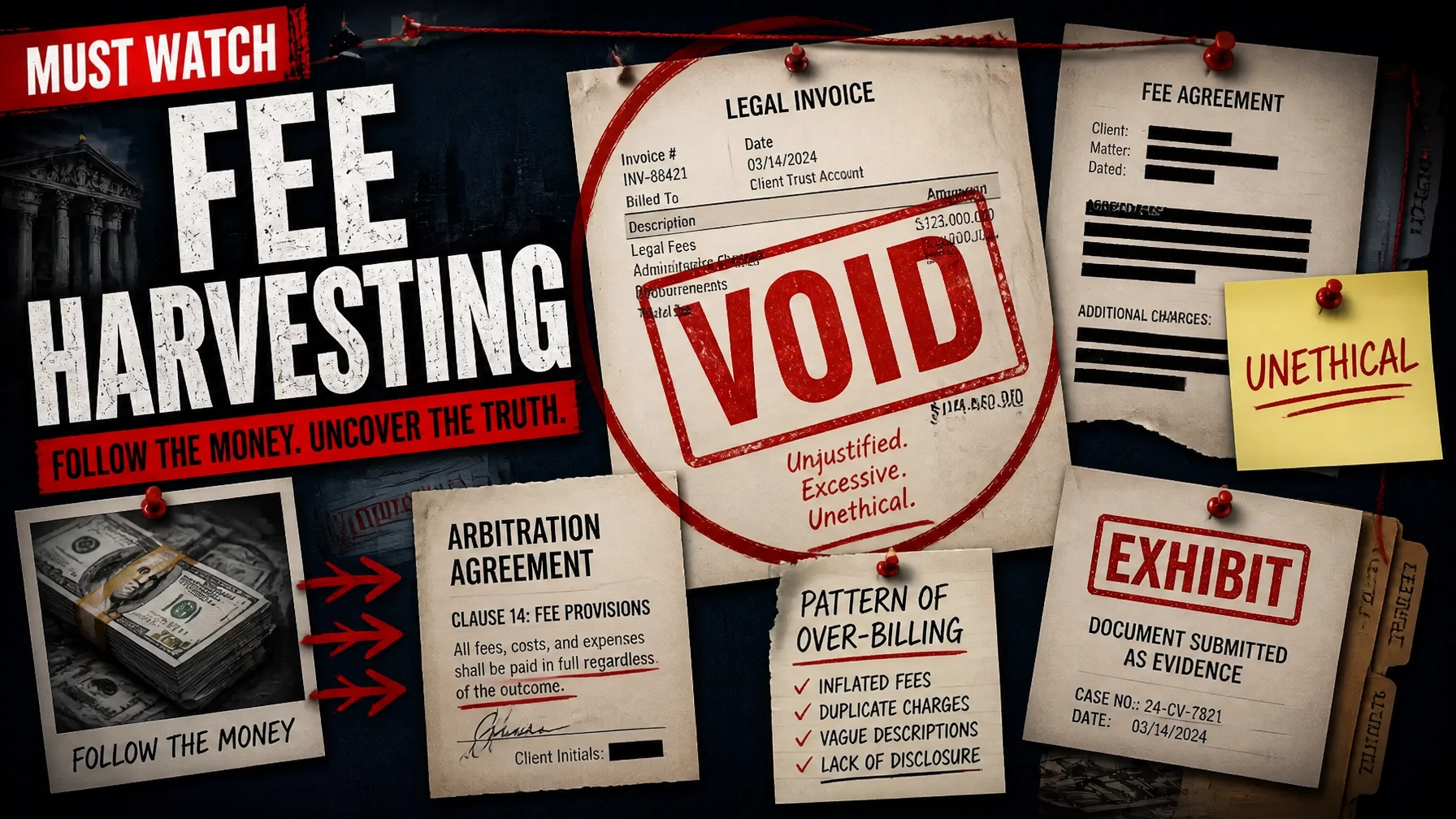
The death of a loved one is supposed to be a time for grieving and honoring a legacy. For many Texas families, however, it becomes the opening scene of a legal thriller where the villains wear suits and the weapon of choice is a pen. Behind the closed doors of prestigious law firms, a predatory practice known as fee harvesting is stripping generational wealth from heirs and funneling it into the pockets of unethical attorneys.
This isn’t just a series of "bad days" in court. It is a calculated, systemic exploitation of the probate system. By the time many families realize they are being harvested, they are already caught in a web of mandatory arbitration and undisclosed conflicts that leave them financially devastated and legally silenced.
The calculated mechanics of fee harvesting
The problem begins with a tactic as old as the legal profession itself: manufactured conflict. When a family enters a probate dispute, predatory lawyers often see not a case to be settled, but an estate to be drained. Instead of seeking a swift resolution, these attorneys may intentionally escalate minor disagreements into full-blown litigation.
The goal is simple. The more conflict there is, the more "work" the lawyers can bill for. In many instances, families are pressured to switch from a predictable hourly rate to a high-stakes contingency fee: often 35% or more of the entire estate. This move transforms the lawyer from a representative into a partner in the inheritance, one who often ends up taking more than the heirs themselves.
The Allison family probate case serves as a chilling blueprint for this practice. After the death of their father, siblings Caroline and Richard Allison sought help to navigate their father’s $20 million estate. Instead of protecting their interests, their attorneys allegedly pressured them into a legal war against their stepmother, despite a $9.5 million trust already being guaranteed. As lead investigator Wayne Dolcefino exposed in Damn Lawyers – Allison Family Probate Case, the result was a scorched-earth strategy that prioritized attorney fees over family stability.
Exposing the mandatory arbitration trap
If the courtroom is where the battle begins, the arbitration room is where justice often goes to die. Predatory lawyers protect themselves from accountability by burying mandatory arbitration clauses in the fine print of their engagement letters. These clauses strip clients of their Seventh Amendment right to a jury trial.
When a client realizes they have been overcharged or misled and attempts to sue for malpractice, they are forced into a private, secretive forum. There is no public record, no jury of peers, and, most importantly, very little oversight. This is where the "stench of cronyism" becomes overwhelming.
In the Allison case, the malpractice claim was funneled into arbitration presided over by Anne Ashby, a former judge. What the Allisons didn't know at the time was the deep web of relationships connecting the arbitrator to the very people she was supposed to be judging. As documented in Damn Lawyers – Rigged Arbitration – the Stench of Cronyism, Ashby allegedly failed to disclose significant professional and financial ties to the opposing counsel and key witnesses.
The result? A ruling that not only dismissed the malpractice claims but ordered the grieving family to pay millions more in legal fees and interest. This pattern is not unique to the Allisons. Gail Echols experienced a similar fate, questioning how her lawyers managed to make more money off her inheritance than she did. Her ongoing battle, ECHOLS, GAIL ANNETTE vs. Abaza, highlights the uphill climb victims face when the system is rigged from the start.
The stench of cronyism and undisclosed conflicts
The investigation into Anne Ashby’s role in these probate disputes has revealed a disturbing lack of transparency. Under penalty of perjury, arbitrators are required to disclose any relationships that could create an appearance of partiality. Yet, legal filings and investigative reports suggest that Ashby omitted key details about her past, including her time at a firm where she worked alongside the very lawyers involved in the Allison dispute.
Damn Lawyers – A Deception further exposes how these hidden connections create a "clubby" atmosphere where the same group of professionals repeatedly rule in each other's favor. When an arbitrator is handpicked by the law firms they are investigating, the neutrality of the entire process is compromised. This isn't just a conflict of interest; it's a betrayal of the legal oath.
The financial toll is staggering. In the Allison case, Ashby awarded the attorneys millions in fees and interest, even as evidence mounted that the legal strategy had cost the heirs approximately $15 million in forfeited assets. This is the ultimate goal of fee harvesting: the complete extraction of wealth under the guise of "legal services."
Systemic failure and the need for legislative reform
The stories of the Allison family and Gail Echols are part of a larger, more dangerous trend across Texas. These are not isolated incidents; they are symptoms of a justice system that has allowed itself to be privatized for profit. News alerts have begun to sound the alarm:
- Texas Families in Estate Disputes – Beware of Predatory Lawyers
- Mandatory Arbitration Enables Predatory Lawyers
- Growing Calls for Arbitration Reform
The data backs up these warnings. Reports from Law360 have documented instances where Texas firms more than doubled their fees during probate disputes, leaving clients with a fraction of what they were promised. Other families have come forward with similar stories of being pressured into contingency agreements that they didn't fully understand.
The "Probate Plot" is thickening, as Damn Lawyers – The Probate Plot details. More victims are emerging, alleging a consistent pattern of fee harvesting and intimidation. Even the digital reputation of these firms is under scrutiny, with reports investigating what is happening with Google reviews and why negative client feedback seems to vanish while glowing reviews appear overnight.
Fixing a broken system
Transparency is the only antidote to the cronyism that has infected Texas probate law. We cannot rely on a self-policing industry to protect the vulnerable. The fix must be systemic and legislative.
First, Texas must pass "Robin’s Law": the Texas Family Integrity and Probate Fairness Act. This legislation would extend the prohibition on contingency fees currently found in divorce and child custody cases to include probate and inheritance disputes. Lawyers should not be allowed to "harvest" a percentage of a family's legacy.
Second, we must end the absolute immunity of arbitrators. When an arbitrator like Anne Ashby fails to disclose conflicts or issues rulings that ignore the law, there must be a mechanism for judicial review. Arbitration should not be a "black box" where rights are disappeared.
Finally, we need to require mandatory malpractice insurance for all attorneys practicing in Texas. As seen in the Houston Attorneys Sued For $5M Over Altered Fee Agreement case, the financial stakes are too high for lawyers to operate without accountability.
The time for quiet settlements is over. The truth about fee harvesting is out, and the families who have been harmed: like the Allisons and Gail Echols: are leading the charge for reform. We must demand a justice system that protects people, not one that destroys them for a fee.
Justice should be for families, not for sale. It is time for the Texas legislature to act and for the "stench of cronyism" to be cleared from our courts.
12 Responses