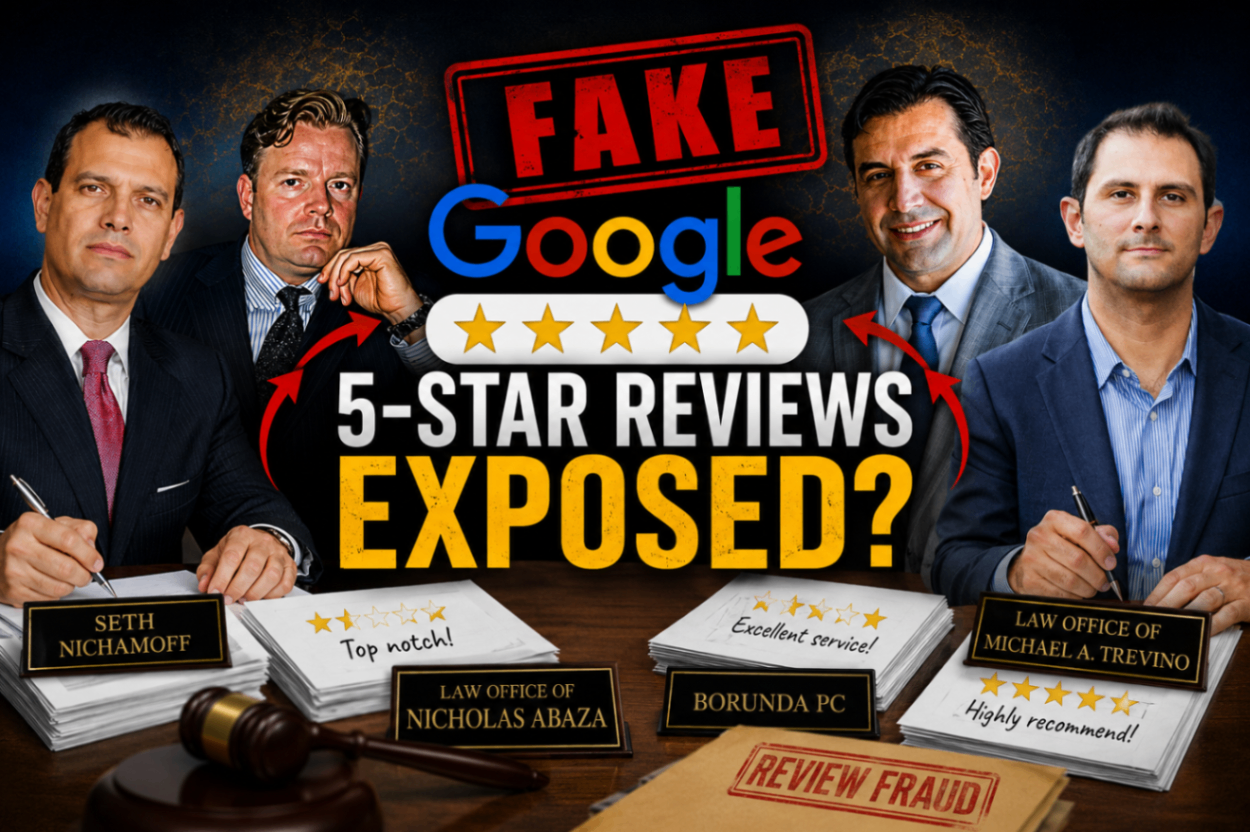
The evidence does not begin in a courtroom. It begins in the architecture of online trust, where a five-star review can function less as speech than as a market signal, and where the appearance of independent public confidence can be engineered with remarkable efficiency.
This investigation examines whether a March 8 review surge tied to attorney circles and attorney spouses crossed from aggressive reputation management into conduct prohibited by the Federal Trade Commission’s Rule on the Use of Consumer Reviews and Testimonials, 16 C.F.R. Part 465.
The rule is direct. Businesses may not use reviews that misrepresent the reviewer’s experience. They may not deploy insider testimonials without clear and conspicuous disclosure of material connections. They may not create a review environment that falsely presents itself as independent when affiliation is doing the work behind the curtain.
That framework matters because the central question here is not whether praise exists. It is whether the praise was presented to the public as independent when the underlying relationships suggest otherwise.
The March 8 “Review Flood,” as documented in the ReviewFraud inquiry, raises that question with unusual clarity. The evidence described in the file points to overlapping personal and professional relationships, including attorney-spouse participation. If those reviews were posted without transparent disclosure of affiliation, the issue is no longer simply image management. It becomes a regulatory problem grounded in the mechanics of deception.
In legal services, reputation is not ornamental. It is often the first filter through which frightened, injured, or financially strained consumers make decisions. A manipulated review pattern can redirect trust before a prospective client ever reads a filing, checks a disciplinary record, or understands the risks of the representation being sold.
THE DATA TRAIL
Consumer deception online rarely announces itself. No broken locks. No alarms. Just a manipulated impression built one search result at a time. For legal consumers, that impression can determine which lawyer gets the call, the consultation, and the retainer. That is why the March 8 activity documented by ReviewFraud.org warrants scrutiny.
According to the inquiry, the pattern is not significant merely because it is positive. It is significant because it appears clustered, relational, and potentially undisclosed. The lead evidence file centers on screenshot evidence of the March 8 “Review Flood,” including the appearance of Jennifer Borunda within the review sequence under examination. In a regulatory analysis under 16 C.F.R. Part 465, that matters for a simple reason: when spouses, relatives, employees, or other insiders contribute to a public reputation profile without clear disclosure of their connection, the review may falsely signal independent consumer experience.
The forensic issue is therefore threefold. First, whether the review content or placement misrepresented actual consumer experience. Second, whether material connections were omitted from reviews that a reasonable reader would interpret as neutral third-party feedback. Third, whether the cumulative presentation of those reviews created a false appearance of independent marketplace approval.
That is not a minor branding dispute. It is a question of whether credibility was sold under conditions the law now treats with growing precision.
REVIEWS, DISCLOSURE, AND FEDERAL RULES
The law is no longer vague on this point.
16 C.F.R. Part 465 prohibits fake or false consumer reviews and bars insider testimonials that fail to disclose material connections. The FTC’s final framework is designed to address precisely the type of distortion that can occur when affiliated actors enter a ratings ecosystem disguised as ordinary consumers.
Placed against that standard, the March 8 review flood takes on greater significance.
The possible violations are specific. If attorney spouses posted reviews without disclosing their relationship, the conduct may fall within the rule’s prohibition on insider reviews lacking clear and conspicuous disclosure. If the reviews implied a type of firsthand consumer experience that did not exist in any ordinary sense, the conduct may implicate the rule’s ban on false or misleading consumer reviews. If a cluster of connected reviewers created the appearance of broad and neutral public approval, the problem is not aesthetic. It is evidentiary.
That is the analytical shift this investigation requires. A review standing alone may look harmless. A review inside an undisclosed network is something else entirely. It becomes a data point in a larger credibility structure, one that may have been built to influence vulnerable consumers at the moment they are most likely to rely on superficial trust indicators.
ReviewFraud.org’s reporting frames the matter with unusual precision. The screenshot evidence tied to Jennifer Borunda and the March 8 “Review Flood” is not peripheral to the story. It is a lead evidence file because it goes to the core elements of a Part 465 inquiry: reviewer identity, material affiliation, timing, and the public impression created by the arrangement.
THE HOUSTON REVIEW CARTEL QUESTION
The pattern alleged here is not random noise. It is a structural question about whether a network of connected lawyers and their immediate circles used digital reviews to reinforce public credibility through affiliation while presenting that credibility as independent.
That distinction matters acutely in the legal market. People seeking counsel are often under financial, medical, or family pressure. They rely on ratings and review summaries because they do not have the time, resources, or technical knowledge to audit a lawyer’s background in real time. If those signals were shaped by undisclosed insiders, the distortion extends beyond one profile. It compromises the integrity of the marketplace in which legal consumers are forced to make urgent decisions.
The March 8 review flood, as described by ReviewFraud.org, should therefore be evaluated not as isolated speech but as a possible case study in digital deception under Part 465.
WHY THIS IS A PUBLIC-INTEREST INVESTIGATION
Legal services are high-stakes purchases made under stress.
A deceptive review ecosystem can redirect vulnerable consumers, bury warning signs, and shield aggressive practices behind a facade of universal approval.
That is why these reviews should be analyzed as documentary evidence: evidence of timing, evidence of affiliation, evidence of disclosure, and evidence of whether credibility was marketed to the public as something organically earned.
If undisclosed insider reviews helped construct that image, the problem is larger than reputational gamesmanship. It is a consumer-protection issue with regulatory consequences. It is also a transparency failure affecting every person who relied on those stars as if they reflected independent client experience.
WHAT THIS INVESTIGATION DEMANDS
This reporting does not ask for speculation. It asks for records. For screenshots. For timestamps. For reviewer identities and relationship mapping. For comparison between public-facing review narratives and the underlying network behind them.
If you preserved evidence tied to the March 8 review flood, document it. If you identified reviews connected to attorney spouses, affiliates, or other insiders, preserve the connection evidence. If you have platform archives, cached pages, complaint records, or related filings, bring them forward.
Accountability begins when manufactured trust is examined like evidence, not accepted like fact.
Community reform begins when consumers, advocates, and regulators insist that legal credibility be earned in the open.