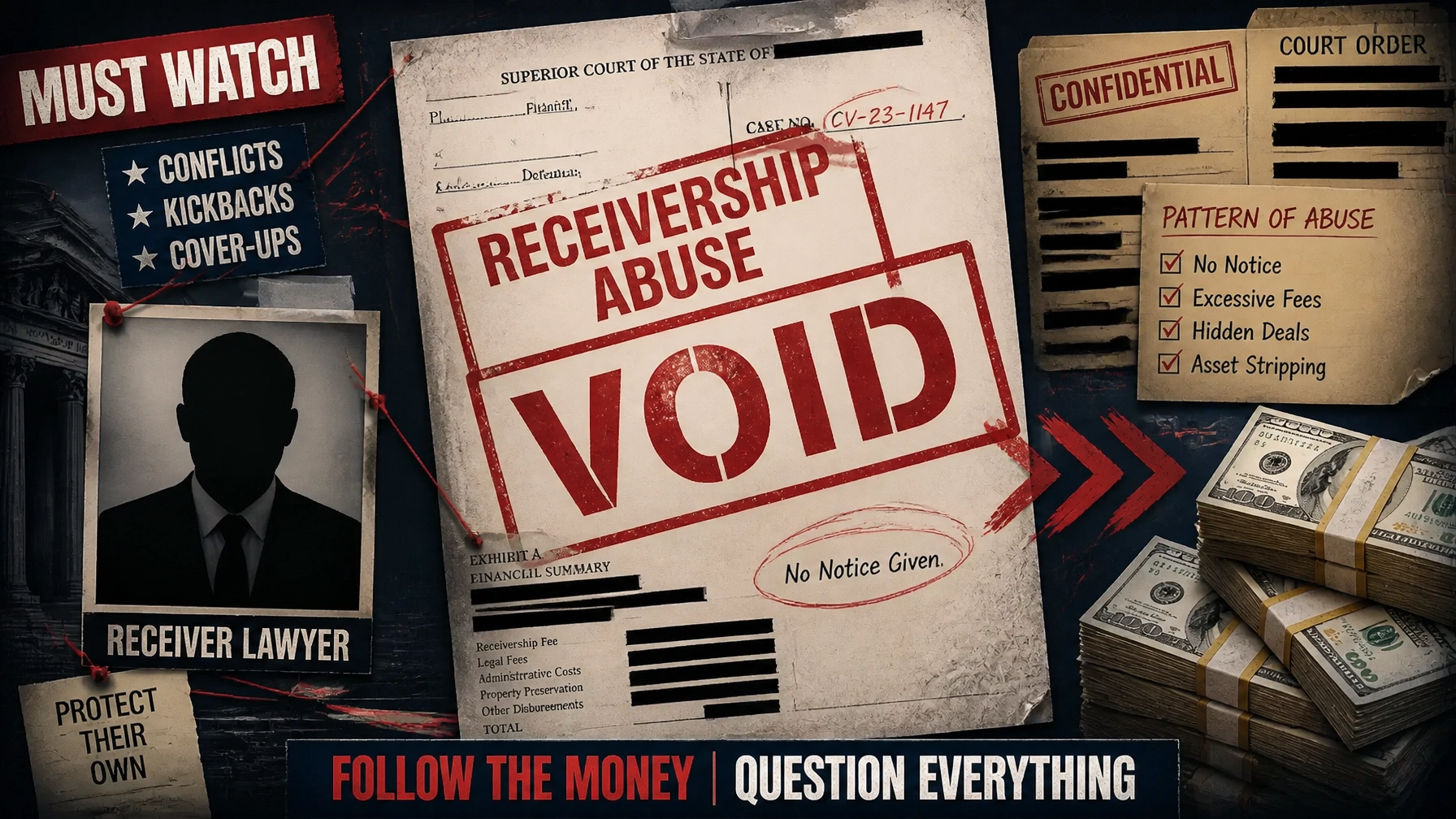
Imagine waking up to find your bank accounts frozen, your business locks changed, and a total stranger standing in your office demanding every password, ledger, and deed you own. You haven’t been charged with a crime. You haven’t even had a chance to tell your side of the story in court. But a judge just signed a piece of paper that hands your life over to a “receiver.”
In the world of Texas probate and civil litigation, this is the “surprise attack”: a court-approved asset raid designed to bypass the constitution and break a victim’s will to fight. While receiverships were intended to protect property from waste, they have been weaponized by a specific breed of predatory lawyers into a high-stakes legal shakedown. This isn’t just about collecting a debt; it’s about “asset stripping” under the color of law.
At Stop Legal Bullying, we’ve watched this play out in cases like the Allison probate battle, where families find themselves trapped in a web of “insider” deals. When Wayne Dolcefino began investigating the “stench of cronyism” in Houston, the trail of breadcrumbs led directly to these aggressive receivership tactics used to extract millions in fees while victims are left with nothing.
The problem: justice for sale in the shadows
A receivership is meant to be an extraordinary remedy: a “last resort.” Yet, in many Texas courtrooms, it has become a “first strike” tool. The logic is simple: if you take away someone’s money and control, they can’t pay for a defense. Predatory attorneys rely on an “insider ecosystem” where the same judges, lawyers, and receivers cycle through cases, approving massive fees for each other while the victim is systematically dismantled.
This is the dark side of the judicial system that Damn Lawyers has exposed. It’s a game of leverage, not law.
Exposing the 5 tactics of receivership abuse
To protect yourself, you have to understand the playbook. These five tactics are used to turn a legitimate legal dispute into a predatory extraction.
1. The no notice ambush
The most effective weapon in the legal bully’s arsenal is speed. In the case of Yancey v. SLJ Co. (2025), the Dallas Court of Appeals had to step in because a receiver was appointed with sweeping powers without a single hearing or even a notice to the victim. The court made it clear: you cannot just seize someone’s property because it’s “convenient.” There must be a “great emergency.”
Predatory lawyers love the “Ex Parte” motion: a fancy way of saying “talking to the judge behind your back.” They claim assets are at risk of disappearing to justify skipping the hearing. By the time you find out, the receiver is already in your bank account.
2. The all assets dragnet
Texas law is supposed to protect certain property: your homestead, your tools of the trade, and your personal basics. But predatory receivers often use “all assets” language in their court orders. They demand everything, including your exempt property, forcing you to spend thousands in legal fees just to prove that the law says they can’t take your house or your car.
They blur the lines between what you own and what is legally protected, banking on the fact that you’ll be too terrified to fight back.
3. The third-party property grab
This is perhaps the most egregious tactic. In a “third-party grab,” the receiver goes after your spouse, your business partners, or your family members who aren’t even involved in the lawsuit. They freeze accounts belonging to separate LLCs or trusts, claiming they are “alter egos” of the debtor.
The Fifth Circuit took a stand against this in Bollore S.A. v. Imp. Warehouse, Inc., ruling that you cannot use a turnover order to seize assets from someone who wasn’t part of the judgment without first proving they are actually liable. But that doesn’t stop lawyers from trying to use the “pressure” of a freeze to force a settlement.
4. The fee meter trap
Receiverships are a gold mine for the “trio” of attorneys and their preferred court officers. In cases like Klinek v. LuxeYard (2023) and Chase v. Chase (2025), Texas courts have pushed back on “automatic” fees. Some orders set a receiver’s compensation at a flat 25% of everything they touch: before they’ve even done a minute of work.
This creates a dangerous incentive: the more aggressively the receiver attacks, the more they get paid. It’s a fee machine where the “neutral” receiver becomes a bounty hunter for the law firm that suggested them.
5. Settle or be destroyed
The final tactic is pure psychological warfare. The goal isn’t necessarily to win a trial; it’s to make the process so expensive and painful that you give up. They threaten to contact your customers, seize your business records, and drag your name through the mud until you sign over your inheritance or assets just to make it stop. This is exactly what the Allisons faced: being pushed into early-morning mediated settlements under extreme duress while “insider” arbitrators like Anne Ashby, with undisclosed conflicts of interest, look the other way.
Abuse warning signs: is your case being hijacked?
If you see these red flags, you are likely in a receivership trap:
- Sudden Seizures: You found out about the receiver after your accounts were already frozen.
- Percentage Fees: The receiver is getting a “cut” of the total assets rather than an hourly rate for actual work.
- Dragnet Demands: The receiver is demanding records for people or companies not named in the lawsuit.
- Insider Ties: The lawyer, the receiver, and the judge seem to have a long history of working together on these specific types of cases.
- Refusal to Disclose: The receiver won’t give you an itemized list of what they’ve taken or what they are charging.
The fix: demanding accountability and Robin’s Law
The current system relies on “abuse of discretion” standards that make it incredibly hard to overturn these orders on appeal. By the time a higher court fixes the mistake, the victim is often bankrupt. We need structural change.
We are calling for the passage of Robin’s Law, which would mandate transparency and protect family integrity in probate and civil courts. We also advocate for the Transparency and Record Preservation Act to ensure that lawyers who abuse these court-stamped weapons are held accountable.
Justice should not be a “court-approved raid” for profit. It’s time to stop the legal bullying and shine a light on the “stench of cronyism” that allows these predatory tactics to thrive. If you have been a victim of a receivership trap, share your story and join the fight for reform.
Join the debate
The judicial system belongs to the people, not the profiteers. We must demand that our legislators require judicial review of all receivership appointments and mandate that every conflict of interest is disclosed under penalty of perjury. Accountability is the only cure for the corruption currently infesting our courts.
#Tags
#LegalBullying #AssetStripping #AttorneyAccountability #DamnLawyers #DolcefinoInvestigates #RobinsLaw #TexasLegalReform #ProbateScandal