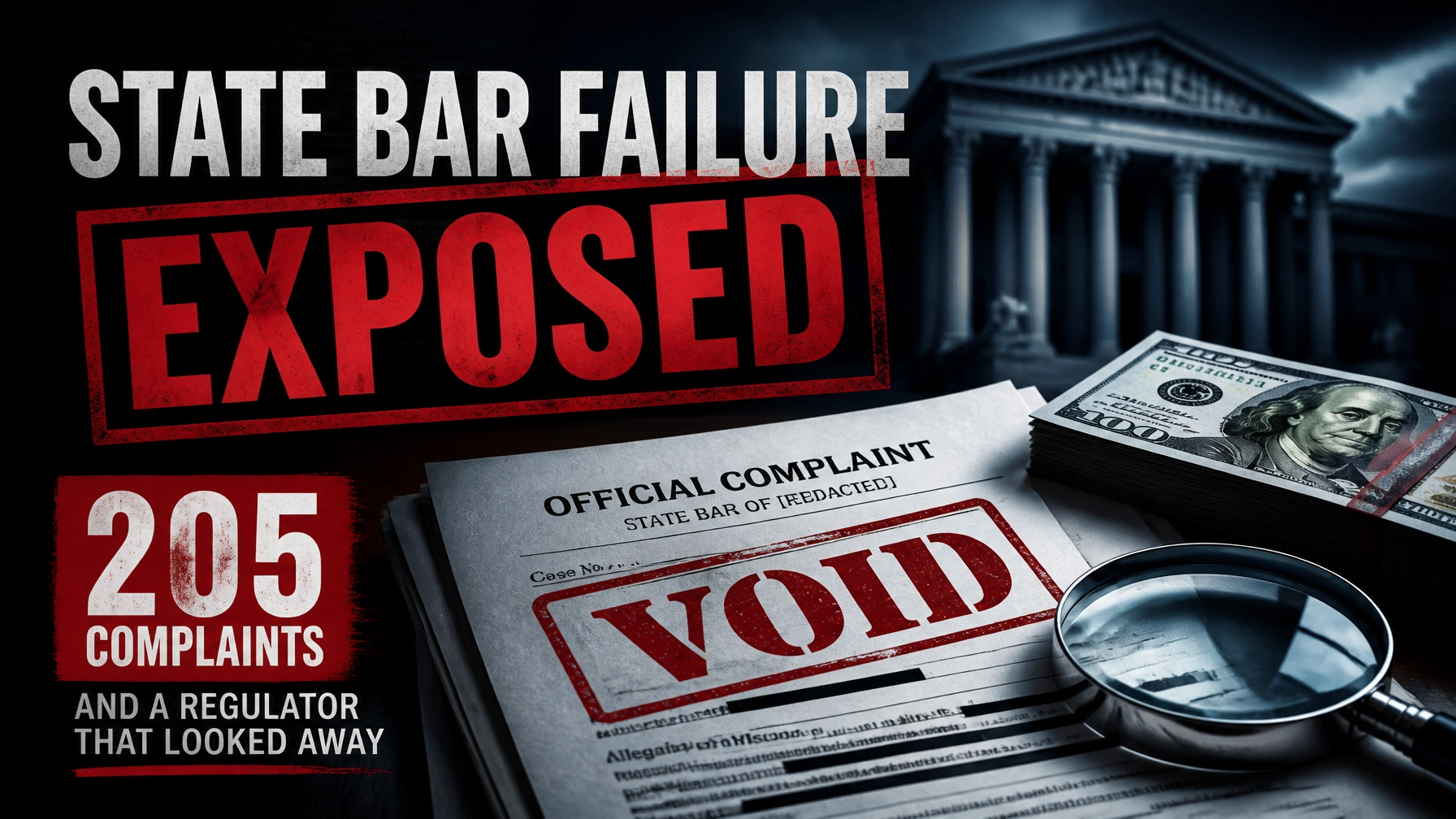
For decades, Tom Girardi was the king of the California legal world. He was the man who took on Pacific Gas & Electric and won, a victory immortalized in the film Erin Brockovich. He was a titan of the bar, a frequent flyer at the most expensive restaurants in Los Angeles, and a man who seemed to have the ear of every judge and politician in the state. But behind the velvet curtains of his luxury lifestyle, a much darker story was unfolding: one of systemic betrayal and a regulatory body that chose to look the other way while hundreds of victims were stripped of their livelihoods.
The fall of Tom Girardi was not a sudden collapse. It was a slow-motion train wreck that the State Bar of California watched for forty years without pulling the emergency brake. While Girardi was busy being celebrated, he was also busy allegedly funneling client money into his own pocket to fund a lifestyle of private jets and diamond earrings.
The 40-year paper trail of betrayal
The numbers are staggering, but they are more than just statistics; they are a ledger of lives ruined. Over the course of four decades, the State Bar of California received 205 disciplinary complaints against Tom Girardi. To put that in perspective, that is roughly one formal complaint every ten weeks for forty years. If a doctor had 205 complaints of medical malpractice, they wouldn’t just lose their license: they would be a national scandal. Yet, Girardi continued to practice, continue to litigate, and continue to “harvest” the settlements of his unsuspecting clients.
Of those 205 complaints, at least 120 of them involved client trust account violations. In the legal world, stealing from a client trust account is the ultimate sin. It is the one thing that is supposed to result in an immediate suspension or disbarment. These weren’t minor procedural errors; they were allegations of fee harvesting on a massive scale.
Despite the sheer volume of evidence, the State Bar’s response was a masterclass in bureaucratic indifference. Records show that nearly 50% of these complaints were closed at the intake stage: rejected before an investigator even picked up a phone. Another 49% were closed after a cursory “investigation” with zero public discipline. For forty years, the regulator tasked with protecting the public gave the most dangerous lawyer in the state a clean bill of health.
Exposing the stench of cronyism
How does a man get away with 205 complaints? The answer was revealed in the damning May Report, an independent investigation that uncovered what it described as a “stench of cronyism” within the State Bar. The report detailed how Girardi didn’t just practice law; he practiced influence-peddling. He cultivated deep, unethical relationships with Bar employees, executives, and investigators.
The report highlights a culture where gifts flowed freely. One investigator alone was linked to nearly $1 million in gifts and benefits associated with Girardi. This wasn’t oversight; it was a partnership. Girardi bought his immunity, and the State Bar sold the safety of the public for the price of dinner and high-society access. While victims were filing bar complaint filings in a desperate attempt to get their money back, the people supposed to help them were reportedly attending Girardi’s parties, a pattern laid bare in the Dolcefino investigation.

This isn’t just a California problem. We see this same pattern of institutional protection for predatory lawyers across the country. Whether it is the lawyers featured in the Damn Lawyer investigation or the countless others operating in the shadows of the probate system, the problem is identical. The regulators who hold the power of licensure are often more concerned with protecting the reputation of the profession than protecting the people the profession serves, leaving behind the same stench of cronyism.
A national crisis of oversight
The Girardi scandal is the tip of a very large, very dark iceberg. Nationally, approximately 90% of all bar complaints are dismissed without any public discipline. This creates a massive gap in public protection, a “no-man’s-land” where unethical attorneys can operate with near-impunity. When a system is designed to favor the “Damn Lawyers” over the victims, the result is a total collapse of trust in the judiciary.
In Texas, we have seen this play out in the probate courts, where probate abuse has become a tool for stripping families of their inheritances. The same lack of transparency that allowed Girardi to thrive in California allows attorney self-dealing to flourish in our own backyard. When the Damn Lawyers are allowed to operate without fear of a bar complaint sticking, they view the client’s assets as their own personal piggy bank.
Wayne Dolcefino, the lead investigator who has spent years exposing rigged systems, has documented through deception evidence how these Damn Lawyers use intimidation and legal maneuvering to silence those who speak out. They rely on a system where contingency fee abuse is the norm and where the regulator is a toothless tiger.
The arbitration trap and the death of accountability
One of the most effective tools in the arsenal of the Damn Lawyers is the mandatory arbitration clause. These clauses are often buried in the fine print of engagement letters, stripping clients of their right to a jury trial and forcing them into a secretive system where the rules of evidence don’t apply, a probate plot disguised as procedure.
This “arbitration trap” is where arbitration corruption goes to hide. In Girardi’s case, and in many cases involving the “Damn Lawyers” in Texas, arbitration is used to keep the misconduct out of the public eye. Because arbitration proceedings are private, a lawyer can be accused of legal bullying dozens of times, but if each case is settled or decided in a private room, the State Bar can claim they have no “public record” of misconduct. It is a perfect system for the predator and a nightmare for the victim.
When you combine a regulator that refuses to investigate with an arbitration system that hides the truth, you get a recipe for inheritance theft that can go on for decades. Tom Girardi didn’t happen because he was a criminal mastermind; he happened because the system was designed to let him succeed, exactly the kind of arbitration trap that protects profiteers.
The fix: A call for systemic reform
The Girardi case must be the final wake-up call. We cannot continue to allow a self-regulating industry to decide when its own members have crossed the line. The “stench of cronyism” is too strong, and the stakes are too high. To fix this broken system, we must demand legislative solutions that prioritize the public over the bar.
First, we must require that all arbitration decisions involving attorney-client disputes be subject to full judicial review and made part of the public record. Sunlight is the best disinfectant, and the privacy of arbitration is the darkness where the “Damn Lawyers” thrive.
Second, we need independent oversight of the State Bar. A regulator that closes 90% of its complaints is not a regulator; it is a shield. We must demand that the legislature step in to create an external audit process for dismissed complaints, ensuring that patterns of misconduct: like the 205 complaints against Girardi: are flagged and acted upon before they result in the destruction of lives.
Third, we must end the practice of “fee harvesting” and ensure that client trust accounts are subject to mandatory, random audits by an independent third party, not just the Bar’s own investigators who might be busy attending the lawyer’s next holiday party.
The tragedy of Tom Girardi is not just that he stole; it’s that he was allowed to steal for forty years while the world watched. We must demand accountability now, before the next Girardi: or the next group of “Damn Lawyers“: claims their next victim. It is time for a legislative debate that puts the rights of the citizen above the protection of the profession.