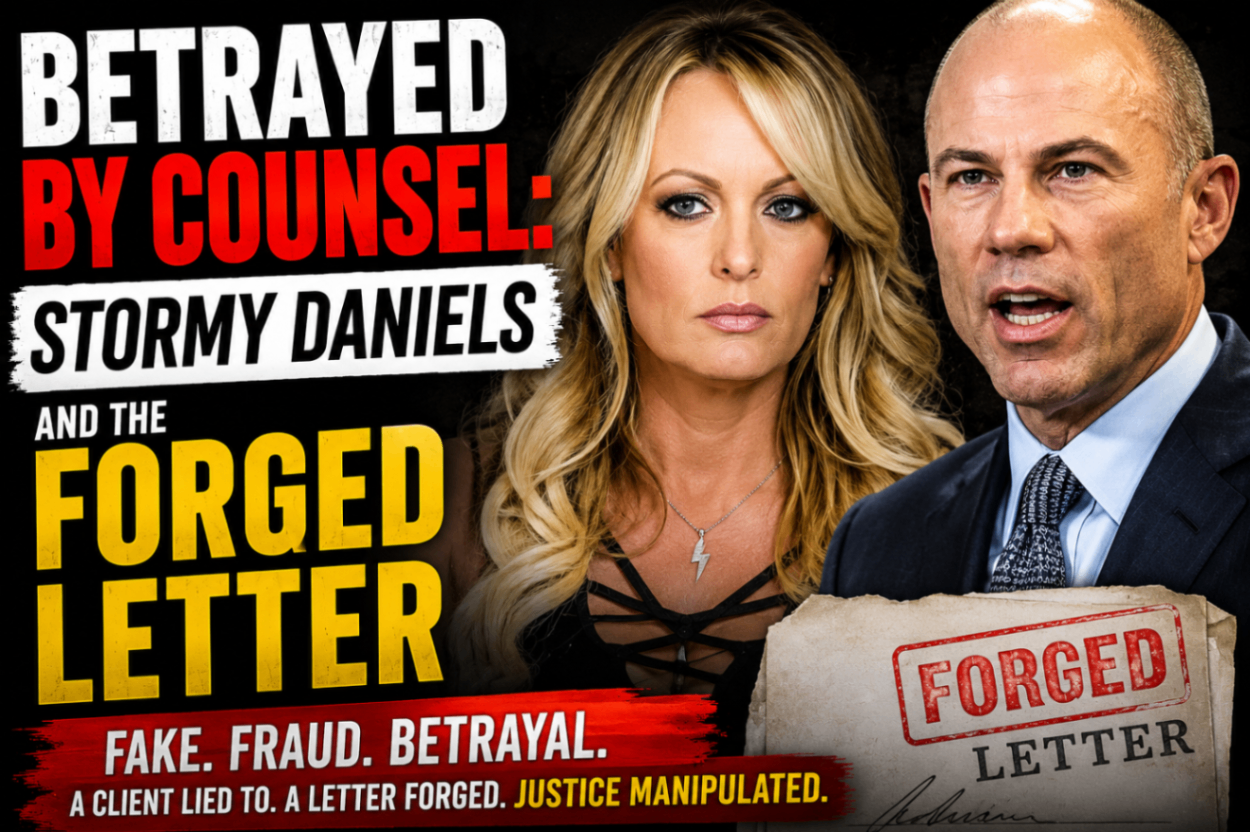
The spotlights of the national media are blinding, but for a client in the middle of a firestorm, they are often the only thing that feels like protection. In 2018, Stormy Daniels was the most famous woman in America, locked in a high-stakes legal battle with a sitting president. By her side was Michael Avenatti, a lawyer who seemed to thrive in the glare of the cameras. He was the champion she thought she needed: bold, aggressive, and seemingly untouchable. But behind the scenes, away from the cable news sets and the viral tweets, a much darker story was unfolding. It was a story of legal bullying and the ultimate betrayal of trust.
While Avenatti was busy crafting a persona as a defender of the underdog, he was secretly orchestrating a cold-blooded financial hit against his own client. The betrayal didn’t happen in a courtroom; it happened on a piece of paper. This is the story of how a lawyer used a forged letter to steal hundreds of thousands of dollars from the woman who trusted him with her life and career. It is a cautionary tale that proves even the most media-savvy clients can be decimated by predatory lawyers when the system lacks real accountability.
The Mirage of Advocacy
In the legal world, the relationship between an attorney and a client is supposed to be sacred. It is built on a foundation of fiduciary duty: the absolute requirement that a lawyer puts the client’s interests above their own. For Stormy Daniels, this trust was the currency that Michael Avenatti spent to fuel his own lifestyle. As her memoir, Full Disclosure, prepared for release, a massive $800,000 book deal was on the table. It should have been a moment of financial security and personal vindication for a woman who had been through the ringer.
Instead, the book deal became a honey pot for a lawyer who saw his client not as a person to be protected, but as a source of fee harvesting. Avenatti didn’t just want his fair share of the proceeds; he wanted it all, and he wanted it immediately. He knew the mechanics of the deal. He knew when the installments were due. Most importantly, he knew how to exploit the administrative gaps in the publishing industry to divert funds before they ever reached his client’s hands.
This is the “stench of cronyism” that Wayne Dolcefino has spent years investigating. Whether it is a high-profile celebrity in a Manhattan federal court or a family trapped in a Texas probate battle, the tactics remain the same. The lawyer positions themselves as the gatekeeper of the money, ensuring that they are the first to get paid: or in Avenatti’s case, the only one to get paid.
The Forgery That Shattered the Shield
The mechanics of Avenatti’s fraud were as simple as they were brazen. To intercept the money, he needed to convince Daniels’ literary agent that she wanted her payments sent to an account he controlled. He didn’t ask her permission. He didn’t send her a contract to sign. He simply sat down at his computer and drafted a fraudulent letter of authorization.
Using a “copy-paste” technique that belongs in a cheap thriller, Avenatti took a signature Daniels had provided for another document and superimposed it onto his fake letter. He sent this forged document to the literary agent, effectively hijacking nearly $300,000 of her book advance. This wasn’t just a mistake or a billing dispute; it was attorney self-dealing at its most criminal level.

When the payments started hitting Avenatti’s account, he didn’t put them in a trust. He didn’t notify his client. He spent them. He used Daniels’ hard-earned money to pay for his own business expenses and personal luxuries. When she asked where her money was, he lied. He told her the publisher hadn’t paid yet. He gaslit her, using his position as her “expert” counsel to keep her in the dark while he drained her accounts. This pattern of behavior is exactly what we see with the Damn Lawyers featured in the Dolcefino investigation: attorneys who use their specialized knowledge to manipulate and exploit those they are sworn to serve.
A System That Rewards Deception
The Avenatti case is a extreme example of a national crisis: the complete lack of oversight within the legal profession. If a lawyer can forge a signature and steal $300,000 from one of the most famous women in the world, what hope does a regular family have in a closed-door arbitration trap? The truth is that the legal system is often a “pay-to-play” environment where the wealthy and the connected can hide their tracks for years.
Many victims are forced into mandatory arbitration, a process that is often rigged in favor of the lawyers. In these secret proceedings, there is no jury, no public record, and often, no right to appeal. It is a system designed to protect the “Damn Lawyers” from the consequences of their actions. This is why we are seeing growing calls for arbitration reform across the country. Every day, families are being forced to forfeit their constitutional rights to a jury trial, only to find themselves at the mercy of a system that values the billable hour over the truth.
In the case of Michael Avenatti, it took a federal investigation and a jury trial to bring the truth to light. He was ultimately convicted of wire fraud and aggravated identity theft, receiving a four-year prison sentence specifically for the Stormy Daniels case. But how many others are currently being victimized by probate abuse or hidden conflicts of interest? The victims of the legal system often face an uphill battle just to get someone to listen to their story.
The Stench of Cronyism and the Path Forward
The fallout from the Avenatti scandal wasn’t just about one man going to prison. it was a wake-up call about the “stench of cronyism” that permeates the upper echelons of the legal world. For years, Avenatti was celebrated by the media and the legal establishment, even as he was allegedly stealing millions from other clients. He was a product of a system that prioritizes prestige and performance over ethics and accountability.
We see this same pattern in Texas and beyond, where attorneys like the Damn Lawyers in the Dolcefino investigation: operate within a system that seems more interested in protecting its own than in seeking justice. Whether it is inheritance theft or the exploitation of vulnerable seniors, the core issue is a lack of transparency.
To fix a broken system, we must demand legislative reforms that strip away the secrecy of arbitration and hold lawyers accountable for their conduct. We need:
- Mandatory judicial review for all arbitration decisions involving attorney-client disputes.
- Increased transparency in how the State Bar handles bar complaint filings.
- Criminal penalties for attorneys who engage in “fee harvesting” and the intentional concealment of client funds.
The conviction of Michael Avenatti is a small victory in a much larger war. As new victims come forward to share their stories of betrayal, it becomes clear that we cannot rely on the legal profession to police itself. The self-regulation of the State Bar has failed. The only way to stop legal bullying is through public awareness, aggressive investigation, and a relentless push for legislative change.
We must stop treating these cases as isolated incidents of “one bad apple.” When the system itself provides the tools for fraud: the secret hearings, the unreviewable decisions, and the lack of oversight: it isn’t just an apple problem; it’s a soil problem. Michael Avenatti didn’t just betray Stormy Daniels; he exposed the vulnerability of every person who walks into a lawyer’s office and hands over their trust.
If you have been a victim of attorney misconduct or believe your lawyer is engaging in deceptive practices, you are not alone. You can check the reputation of firms through resources like ReviewFraud and join the growing movement for legal reform. It is time to bring the “Damn Lawyers” out of the shadows and into the light of accountability. The era of the silent victim is over. We are demanding a system where the law actually follows the law.