Who’s really writing those 5-star reviews?
Online reviews can influence a family’s choice of lawyer within minutes. A five-star rating may appear to offer reassurance when a prospective client is frightened, financially pressured, or trying to navigate the lawyer selection landscape without knowing whom to trust.
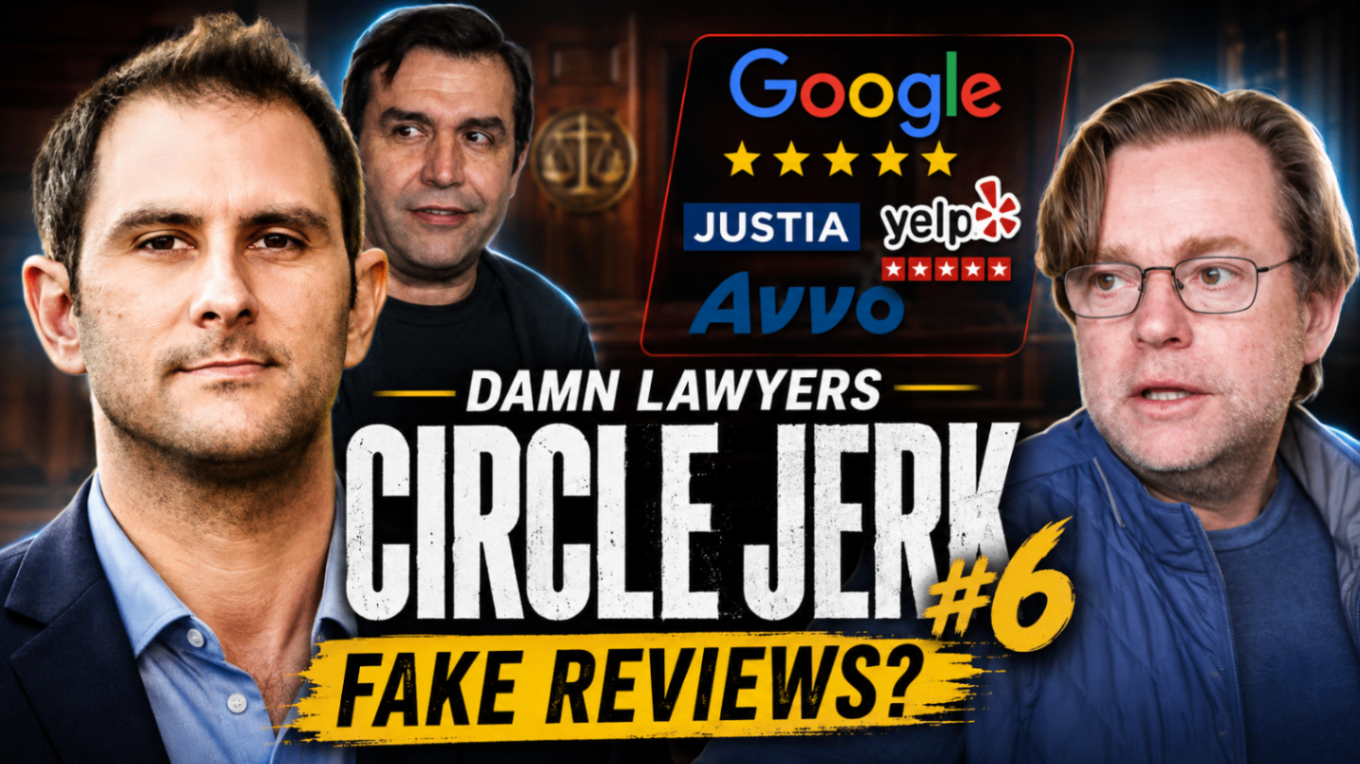
That is the question at the center of New Episode: Damn Lawyers: Circle Jerk #6 — Review Fraud. In the new video in the Damn Lawyers investigation, Wayne Dolcefino examines allegations that some lawyers may recruit family members, neighbors, business partners, friends, and other lawyers to help create a picture-perfect online reputation. According to the accompanying material, the reported concern is not simply positive feedback. It is whether lawyers self reviewing each other, undisclosed relationships, and coordinated praise can distort how consumers evaluate risk. Readers can also review the broader investigation page for background on the launch.
The video is available in several locations. These are not separate investigations or different stories. They are three locations for the same release: consumers can watch the investigation, view the video release, or watch Dolcefino’s latest video release for Circle Jerk – Review Fraud for surrounding context.
Why review fraud matters when choosing a lawyer
Hiring a lawyer is not an ordinary purchasing decision. A client may be choosing counsel during a death in the family, a contested inheritance, a guardianship dispute, a malpractice crisis, or another form of legal abuse. The decision can involve substantial fees and consequences that cannot easily be reversed.
That vulnerability makes online reputation especially powerful. A prospective client may search for google review fraud, compare star ratings, read a few testimonials, and assume the results reflect a complete record of client experience.
The investigation alleges that this assumption can be dangerous. The video reports that some favorable reviews may have been written by people with undisclosed personal, family, or professional relationships to the lawyers being praised. The complainants say the parallel concern is what happens to negative feedback after it appears online. For readers seeking source context, this launch connects to the first probate investigation, the accompanying case clip, and the related review investigation.
Most businesses respond to a bad review, address the complaint, and try to earn the customer back. The reported concern here is different. According to the accompanying material, the question is what happens when the response is instead an effort to make criticism disappear.
Those are allegations and investigative claims, not established facts. A review disappearing from Google, Yelp, or another platform is not automatically proof of improper suppression. Platforms may remove content under neutral policies involving spam, duplication, privacy, harassment, unsupported claims, or terms-of-service violations. The important consumer question is whether enforcement is applied consistently and whether the public can tell why a review vanished.
The five-star problem
The video reports on alleged patterns involving glowing reviews that may not clearly identify the reviewer’s relationship to the lawyer. It also raises questions about review fraud, review manipulation, unusually generic praise, clustered posting behavior, and descriptions that seem disconnected from a specific client experience. Additional context appears in the review-fraud investigation’s broader context and in the related campaign update.
None of those signs, standing alone, proves deception. A genuine client may write a short review. A busy lawyer may receive several reviews in a short period after requesting feedback. A reviewer may prefer not to disclose personal information publicly. A relationship or positive review alone does not prove attorney misconduct.
Patterns deserve closer attention, however. Warning signs may include:
- Numerous fake 5-star reviews posted within a narrow period.
- Similar wording, sentence structure, or unusual phrases across different accounts.
- Reviewers who have little or no other public activity.
- Testimonials that praise a lawyer generally but provide no verifiable details about the legal service.
- Reviews from people who appear to have a personal, business, or family connection to the firm.
- A profile with an unusually perfect rating but little evidence of ordinary client experiences.
- Older negative reviews that no longer appear, with no visible explanation.
This is the concern sometimes called rating laundering: not necessarily the creation of one fake review, but the construction of a reputation that makes criticism difficult to find. The investigation alleges that this type of online presentation can make a predatory lawyer appear safer than the available evidence warrants. Readers can compare additional visual reporting with the additional investigation clip.
What the accompanying material says: and what it does not establish
The accompanying press release entitled: CONSUMER ALERT: New FTC Complaints Allege Houston Probate Attorneys Jorge Borunda, Nicholas Abaza, and Michael Trevino Create Fake Online Reviews to Boost Ratings, but those complaints are allegations, not agency findings. The video is investigative reporting, not a legal determination about any lawyer or firm, and a separate article addresses the complaints and legal standards in detail.
Why disappearing criticism is difficult to evaluate
A person searching for a lawyer usually sees only the current public profile. They may not know whether older reviews were deleted by the author, removed by the platform, hidden by a profile change, or challenged by the business.
That information gap creates a serious transparency problem. Opaque platform rules, disappearing complaints, and fragmented oversight can make patterns difficult for consumers to evaluate. But that concern should not be turned into an unsupported claim of a coordinated censorship scheme. Each removal requires evidence and context.
Consumers should also be cautious about the opposite tactic: fake negative reviews designed to damage a competitor. Review manipulation can work in either direction. False praise deceives prospective clients, while false criticism can unfairly harm a legitimate professional.
The answer is not to assume every lawyer with a high rating is dishonest or every negative review is true. The answer is to demand more information, preserve evidence, and assess reputation through multiple sources.
Questions consumers should ask before retaining counsel
Online research should be the beginning of due diligence, not the end. Before signing a fee agreement, prospective clients should consider asking:
Who wrote the 5-star reviews? Look for detailed accounts of an actual legal service rather than generic praise. Check whether reviewers have other activity that appears consistent with genuine experience.
Were they actually clients? A reviewer who is a family member, employee, business associate, referral partner, or close friend may have a perspective worth considering, but readers should not be led to believe that person is an independent client.
Where did the unhappy clients’ reviews go? Search the lawyer’s name and firm name in multiple ways. Review archived pages, directory listings, and dated screenshots where available. A missing review is not proof of misconduct, but unexplained changes can justify additional questions.
Can the fee terms be provided in writing? Ask what is hourly, what is contingent, what expenses are charged separately, and what events may increase the total cost. In estate and probate matters, request a clear explanation of how fees will affect the estate or inheritance.
Does the lawyer carry malpractice insurance? Ask whether coverage exists and whether the lawyer is willing to disclose the relevant limits or exclusions. If there is no coverage, that may be an important factor in deciding whether to proceed.
Should another lawyer review the agreement? A second opinion can be especially valuable before retaining probate counsel, changing from hourly billing to a contingency arrangement, or assigning claims.
Consumers should preserve screenshots, URLs, dates, review text, account names, and correspondence before reporting suspected manipulation. Do not edit original evidence. Save copies in more than one location. If a complaint is submitted to a platform, agency, or professional regulator, retain the submission and any response.
Accountability requires a record
The broader lesson of Damn Lawyers Circle Jerk #6 is not that consumers should distrust every online review. It is that legal reputation systems should be transparent enough to deserve public trust.
Platforms should explain meaningful review removals without exposing private information. Lawyers and firms should disclose material relationships behind testimonials and avoid presenting promotional praise as independent client experience. Regulators should take credible patterns seriously, while preserving fairness for respondents and complainants alike.
Texas also needs stronger attorney-discipline transparency. Complaints should be publishable with appropriate disclaimers, outcomes should be tracked publicly, repeat patterns should be identifiable, and conflicts of interest should be resolved rather than obscured. Procedural fairness is not anti-lawyer. It protects honest lawyers from unsupported accusations while giving complainants a meaningful way to document misconduct and seek review. That kind of lawyer accountability depends on a public record.
The legal system depends on trust, but trust cannot be manufactured by a five-star screen. Consumers deserve to know whether praise is independent, whether criticism was fairly handled, and whether the lawyer they hire has earned credibility beyond an online rating.
Stop Legal Bullying will continue documenting allegations of review fraud, review manipulation, fake 5-star reviews, attorney misconduct, and legal abuse that may leave clients financially or emotionally harmed. Consumers can review related campaign reporting and then decide for themselves after watching Episode 6.
Disclaimer: This article reports allegations, complaints, and investigative claims. It is not a finding by the FTC, a court, a disciplinary authority, or any other government agency, and it is not legal advice.