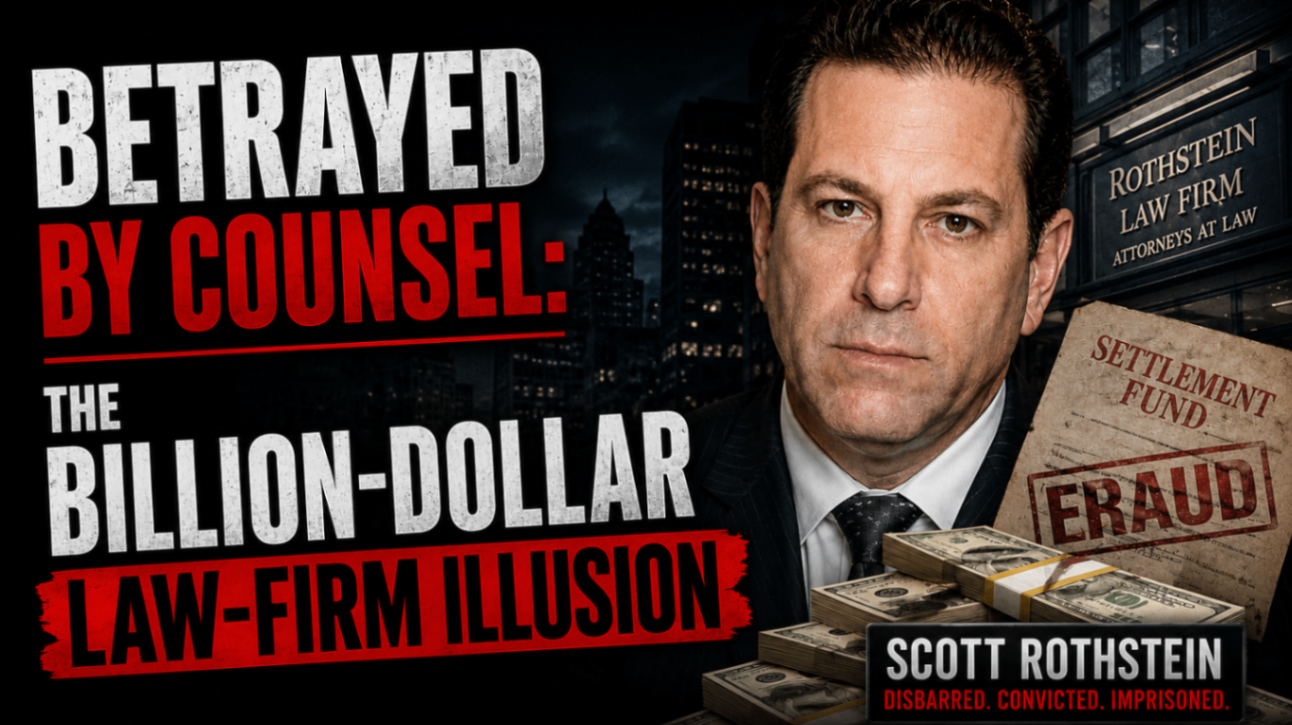
The air inside the offices of Rothstein Rosenfeldt Adler was thick with the scent of expensive cologne and absolute authority. In the heart of Fort Lauderdale, the firm’s headquarters occupied prime real estate, a sprawling monument to legal success that spanned tens of thousands of square feet. For any investor walking through those doors, the conclusion was immediate and visceral: this was a place of power. There were more than seventy attorneys, a fleet of luxury cars in the garage, and a chairman, Scott Rothstein, who moved through political circles like a kingmaker.
But the marble floors were a facade. The prestigious letterhead was a lie. Behind the heavy oak doors of the executive suite, Rothstein was orchestrating a $1.2 billion Ponzi scheme: the largest in Florida history: proving that in the world of predatory lawyers, a large office and a prominent name only verify that an organization exists; they can never verify that the transaction is real.
The Problem: The High-Stakes Mirage
The hook was as elegant as it was deceptive. Rothstein told wealthy investors he had access to a goldmine of “confidential legal settlements.” He claimed his firm represented plaintiffs in sensitive sexual harassment and whistleblower cases against major corporations. These companies, he argued, were desperate to keep the details quiet. They had already wired the full settlement amounts into the firm’s trust accounts, but there was a catch.
The supposed victims: often described as single mothers or whistleblowers in dire financial straits: couldn’t wait for the scheduled payout dates. Rothstein offered investors a chance to “purchase” these settlements at a steep discount. An investor could put up $500,000 today to receive a $750,000 payout in three months. It was framed as a guaranteed win, backed by the perceived safety of a law firm’s IOLTA trust account.
In reality, the plaintiffs didn’t exist. The corporations hadn’t settled anything. The entire operation was a factory for inheritance theft on a systemic scale, where new investor money was simply shuffled to pay off old investors while Rothstein drained the rest to fund a lifestyle of yachts, watches, and political influence.
The Expose: Forgeries and the Stench of Cronyism
To keep the illusion alive, Rothstein didn’t just lie; he manufactured a parallel legal reality. When investors asked for proof, he provided federal court documents with the forged signatures of sitting judges. He went so far as to have associates pose as judges in sham proceedings to convince skeptical marks that the litigation was legitimate.
This level of audacity requires more than just a criminal mind; it requires a system that is far too comfortable with secrecy. The “confidentiality” of the settlements served as a perfect shield, preventing investors from verifying details with the supposed defendants. It is the same lack of transparency we see today in cases involving arbitration corruption, where the public is locked out of the room while “the Damn Lawyers” featured in the Dolcefino investigation handle millions of dollars behind closed doors.
Scott Rothstein’s firm was a shell, but it was a shell protected by the bar’s inherent bias toward its own. For years, the red flags were ignored. The lavish spending, the unusual investment products being sold from a law office, and the aggressive posturing should have triggered immediate oversight. Instead, the stench of cronyism allowed the rot to spread until it reached a billion-dollar breaking point.
Discussing the Damage: The Human Cost of Deception
When the house of cards collapsed in 2009, Rothstein fled to Morocco with a suitcase full of cash, leaving behind hundreds of shattered lives. While some investors were wealthy institutions, many were individuals who had bet their life savings on the integrity of a licensed attorney. They believed that a law firm’s trust account was a sacred vessel. They were wrong.
The Rothstein case mirrors the modern exploitation seen in probate courts across the country. Whether it is a fake settlement in Florida or fee harvesting in a Texas courtroom, the tactic remains the same: use the complexity of the law and the prestige of the office to intimidate and confuse. The Damn Lawyers operate in a system where the billable hour and the “confidential” agreement often take precedence over the rights of the victim.
Wayne Dolcefino has spent years exposing how these rigged systems function. Just as Rothstein used forged documents to create a false sense of security, modern predatory actors use “mandatory arbitration” to ensure that their actions are never scrutinized by a jury of peers. This is why we see growing calls for arbitration reform as every day more families realize they have signed away their constitutional rights to a group of insiders.

The Fix: Demanding Accountability and Legislative Change
The Rothstein saga ended with a 50-year prison sentence, but the systemic failures that allowed him to thrive remain largely unaddressed. If we are to stop the next billion-dollar illusion, we must push for aggressive legislative solutions that strip away the veil of secrecy used by unethical attorneys.
- Judicial Review of Arbitration: No attorney should be able to force a client into a private forum that is not subject to judicial review. We need legislative reforms that ensure all legal disputes, especially those involving fiduciary duty, can be heard in a public courtroom.
- Trust Account Transparency: The IOLTA system is ripe for abuse. There must be greater oversight and random auditing of firm trust accounts to ensure they are not being used as Ponzi vehicles or for attorney self-dealing.
- Reform of the Bar Complaint Process: Currently, the system for bar complaint filings is often a “black hole” where valid grievances are dismissed by committees made up of the very people being complained about. We need independent, non-lawyer oversight of attorney discipline.
- Protection for Probate Victims: Families dealing with the loss of a loved one are particularly vulnerable to probate abuse. We must enact strict limits on the fees that can be harvested from estates by court-appointed “ad litems” and administrators.
The lesson of Scott Rothstein is that the “prestigious” firm is often the most dangerous. The size of the office is not a shield against legal bullying; often, it is the weapon. Whether it’s the victims of Anne Ashby or those fighting against contingency fee abuse, the fight remains the same.
We must continue to shine a light on the probate persecution that happens in the shadows. We must demand that our legislators stop protecting the guild and start protecting the public. Accountability is not an option; it is a necessity. If you have been harmed by the “Damn Lawyers” or any predatory legal practice, your voice is the most powerful tool for reform. It is time to move the debate from the hallways of the courthouse to the floor of the legislature.