In the shadowy corners of law firm offices, beneath the polished mahogany and the scent of expensive cologne, lies a trap. It is a single paragraph buried deep within a thirty-page retainer agreement. Most clients never see it. Those who do are told it is a standard “efficiency measure.” But in reality, it is a masterclass in self-preservation. It is the mandatory arbitration clause: the ultimate shield for attorneys who plan to prioritize their pockets over your protection.
When you hire a lawyer, you believe you are buying a champion. You expect a gladiator who will fight for your rights in an open court. But for many, the moment they sign that contract, they have already lost. They have unknowingly waived their Seventh Amendment right to a jury trial, trading the transparency of a public courtroom for the windowless silence of a private arbitration room where the rules are written by the very industry they are seeking to hold accountable.
The silent killer of legal accountability
The problem begins with a fundamental imbalance of power. Most individuals seeking legal counsel are in a state of crisis: dealing with a death in the family, a massive financial loss, or a complex probate battle. They are not looking for a “shield” for their lawyer; they are looking for a sword for themselves. Yet, predatory lawyers use these moments of vulnerability to insert clauses that insulate them from the consequences of their own misconduct.
This isn’t just about efficiency; it’s about the systemic erasure of legal bullying from the public record. When a lawyer commits malpractice, overcharges a client, or engages in series backstory, a public lawsuit creates a trail. It alerts the bar, the media, and future clients. But arbitration is a black box. There are no cameras. There is no public transcript. There is no jury of your peers. There is only a hand-picked “neutral” who often relies on the very law firms they are judging for future business.
That blackout mentality does not stay inside arbitration. It spills outward into what can only be called the Censorship Escalation Playbook. First they went after former client reviews. Avvo, Yelp, Justia, and Google all came under pressure because truthful public complaints threatened the image the predatory lawyers needed to protect. Then they tried to remove the Gail Echols testimonial, branding it “false” without disproving the firsthand account at all. The pattern is not hard to see: when they cannot answer the facts, they try to disappear the facts.
Exposing the damn lawyers and the arbitration shield
The most chilling example of this shield in action comes from the investigative files of Wayne Dolcefino. His deep dive into the Houston probate world has pulled back the curtain through Video 1: Damn Lawyers on the lawyers featured in the Damn Lawyer investigation.
The predatory lawyers allegedly orchestrated a scheme that would make a novelist blush. In the high-stakes Allison family probate case, they reportedly secured a 35% contingency fee on an entire estate before it was even fully settled. But the real betrayal happened behind closed doors. During an early-morning mediation, the Damn Lawyers allegedly convinced the Allisons to walk away from $15 million in potential assets, choosing instead to settle for a deal that guaranteed their own massive fees while leaving their clients with a fraction of their inheritance.
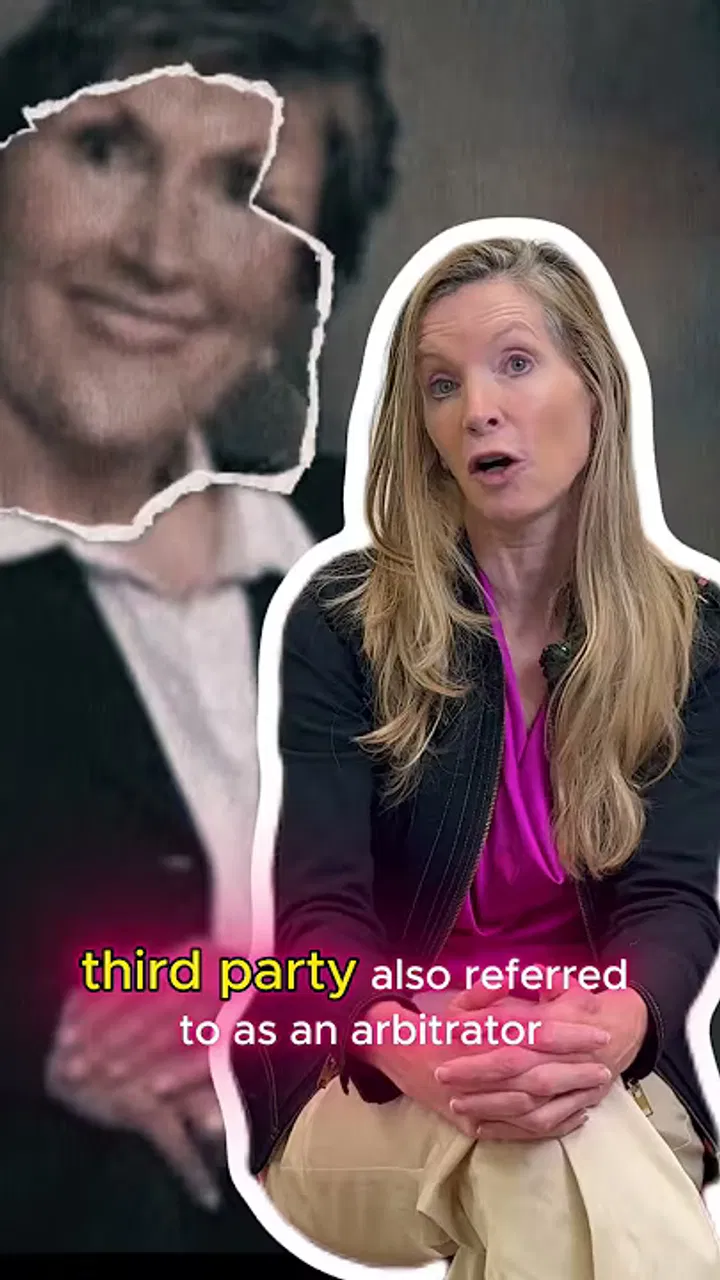
When the victims tried to fight back, they hit a brick wall: the arbitration shield. Instead of a public trial where a jury could see the evidence laid out in New Alleged Victims, the case was funneled into private arbitration. The “judge” in this secret room was the arbitrator, a former judge whose subsequent rulings have become a lightning rod for controversy.
The censorship playbook escalated again when the scrutiny moved from personal testimony to journalism. Wayne Dolcefino’s reporting in Video 5: Arbitration Trap was attacked with vague accusations of falsehood, yet no one identified which factual claims were supposedly untrue. That omission matters. It is the tell. If there were real rebuttals, they would be stated plainly. Instead, the tactic is broad denunciation designed to chill reporting, frighten platforms, and exhaust anyone willing to keep asking questions.
Despite allegations of contingency fee abuse, the arbitrator didn’t just uphold the lawyers’ fees; she expanded them. She ordered the victims to pay an additional $1.5 million to the very lawyers they were suing for fraud. In a move that defied logic, she even awarded fees to counsel, specifically Michael Trevino, when the client claimed they had never even hired. This was documented in a bar complaint on Michael Trevino, which the Texas State Bar dismissed. This is the reality of the probate plot inside a system now defined by probate abuse victims: a rigged game where “the house always wins” because “the house” chooses the dealer.
The national crisis behind the stench of cronyism
This isn’t an isolated Texas problem; it’s a national epidemic hiding behind sealed proceedings and selective silence. From the “kids-for-cash” scandal in Pennsylvania to the pay-to-play schemes in Philadelphia, we see a recurring theme: when legal professionals are allowed to operate in the dark, the pattern described in Video 2: The Stench of Cronyism and Video 3: A Deception becomes harder to deny.
Arbitration was originally designed for sophisticated businesses to resolve technical disputes quickly. It was never intended to be a getaway car for lawyers accused in Estate Disputes. By forcing malpractice claims into private forums, the legal profession has created a two-tiered system of justice. One for the elite who know how to navigate the “good old boy” network, and one for the victims who are left holding the bill for their own destruction.
Now the playbook has advanced to its next stage: press release distribution. After reviews were targeted, after a personal testimonial was challenged, and after a journalistic investigation was attacked, the pressure moved to free press coverage itself. A major newswire source carrying Mandatory Arbitration and related reporting is now being hit with more bully tactics aimed at suppressing distribution. They do not like the truth. They will not stop attacking and trying to censor anything said about them that is true. The campaign keeps escalating because each truthful account reaches a wider audience than the last.
The American Arbitration Association (AAA) and other private forums often boast about their neutrality, yet the data tells a different story. When an arbitrator’s livelihood depends on being selected by law firms, the incentive to bite the hand that feeds is non-existent. It is a system that invites gross negligence to go unpunished, shielded by the very contracts meant to ensure “fairness,” while more victims of Anne Ashby are left asking whether the process was ever neutral at all.
Fixing a broken system: the path to reform
We cannot allow the courtroom doors to remain padlocked. The “shield” must be shattered. True arbitration reform requires a fundamental shift in how we view the attorney-client relationship.
First, we must demand Legislative Demands that make mandatory arbitration in legal malpractice cases unenforceable. A client should never be forced to waive their right to a jury trial before a dispute even exists. If arbitration is as “fair” as the lawyers claim, let the parties agree to it after a problem arises, not as a condition of hiring a protector.
Second, any arbitration involving allegations of lawyer misconduct must be subject to full judicial review. Currently, it is nearly impossible to overturn an arbitrator’s decision, even if they blatantly ignore the law or fail to disclose conflicts of interest. This “hands-off” approach by our courts is an abdication of duty.
Finally, we need total transparency. Every bar complaint filings and every arbitration award involving attorney misconduct should be a matter of public record. Sunlight is the only thing that can kill the rot of cronyism that has infested our probate and civil courts.
The full Censorship Escalation Playbook is now visible in plain sight: review platforms first, individual testimony second, journalistic investigation third, and broad news distribution fourth. The common thread is simple. Truth appears, public attention follows, and the bully campaign intensifies. That is why the Dolcefino investigation matters. Documentation breaks the silence that allows this machinery to keep operating.
The Damn Lawyers and their cohorts count on your silence. They count on the fact that you will be too exhausted, too broke, and too intimidated by the “shield” to fight back. But as Wayne Dolcefino’s investigation has shown, when we pull back the curtain, the “sharks” aren’t as invincible as they seem. It’s time to demand accountability, defend free speech, and force a justice system that actually delivers justice.