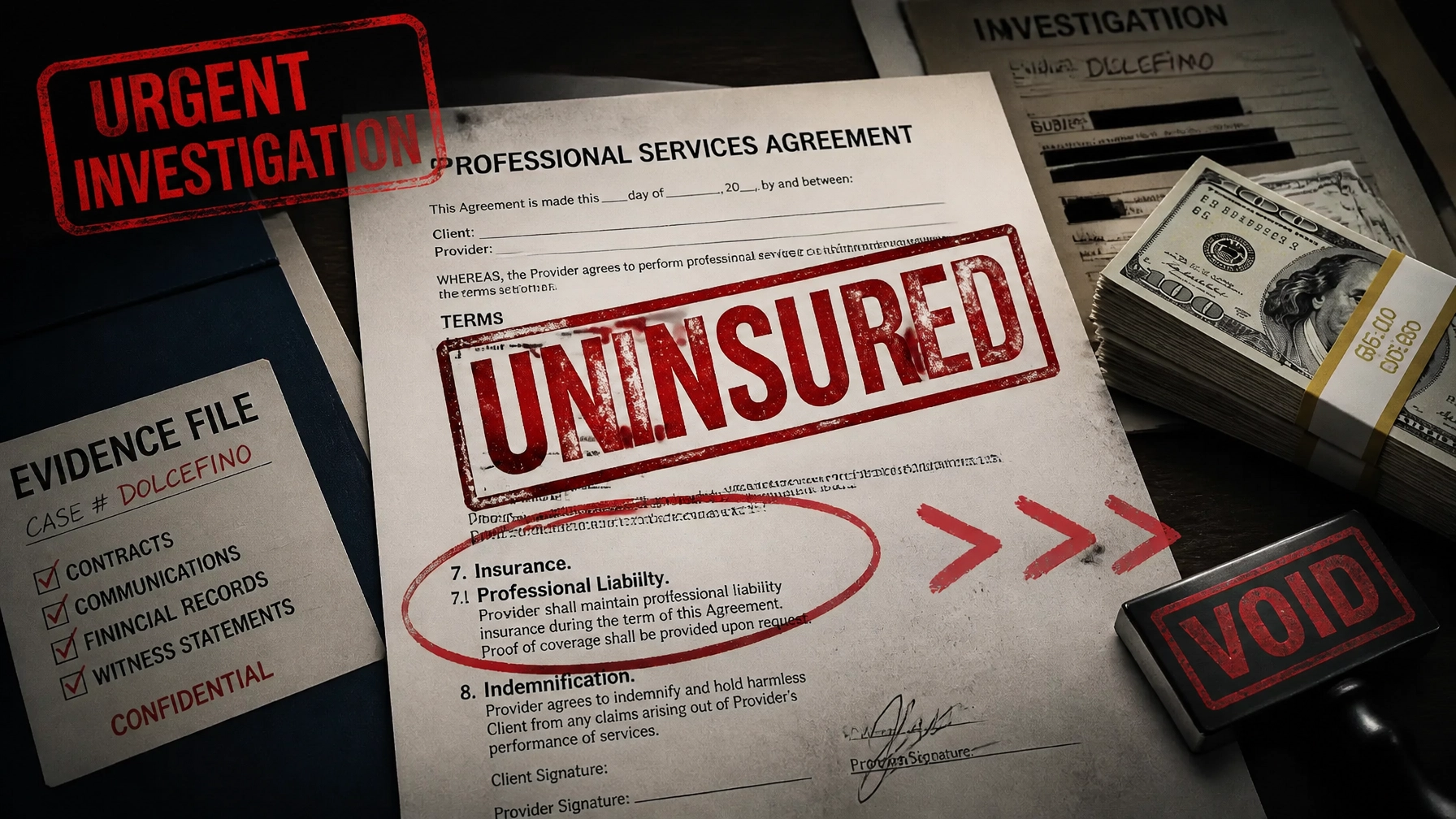
The courtroom doors swing shut with a heavy, final thud. You’ve spent years fighting, thousands on legal fees, and endured the emotional wringer of a justice system that feels more like a gauntlet. Finally, the verdict is in. You won. Your attorney committed malpractice, the evidence was irrefutable, and the court has awarded you damages to make you whole. But as you reach for the finish line, the floor drops out. You discover the man in the expensive suit, the one who swore to protect your interests, doesn’t have a dime of malpractice insurance. He is “judgment-proof,” his assets shielded behind clever corporate shells, and you are left holding a worthless piece of paper.
In Texas, this isn’t a nightmare: it’s a common reality.
The Invisible Trap: A System Built for Lawyers, Not Victims
Most Texans walk into a law office under a dangerous delusion. They assume that because doctors, architects, and even many hair stylists are required to carry professional liability insurance, their lawyer must be covered too. It’s a logical assumption. We are told the law is a noble profession governed by strict ethical codes. But in the Lone Star State, that assumption is a trap.
Texas law does not currently require attorneys to carry malpractice insurance. While the State Bar of Texas “encourages” it, there is no mandate. This creates a playground for predatory practitioners who know they can walk away from their mistakes: or their intentional misconduct: without ever paying a cent to the people they’ve harmed. It is the ultimate shield for legal bullying. When a lawyer knows they cannot be held financially accountable, the incentive to act with integrity vanishes, replaced by a stench of cronyism that protects the firm over the family.
This lack of transparency is the first weapon in a lawyer’s arsenal. They don’t have to tell you they aren’t insured. They can take your life savings, mishandle your case through gross negligence or undisclosed conflicts, and when the dust settles, they simply move on to the next victim. For those caught in the arbitration trap, the situation is even grimmer. Private arbitrators, often friends or former colleagues of the very attorneys they are judging, operate in the shadows with zero judicial review, ensuring that even if malpractice is obvious, it never sees the light of day.
Exposing the Shell Game: Lessons from the Allison Case
To understand how this lack of insurance fuels systemic corruption, one needs to look no further than the Allison probate case. This wasn’t just a legal dispute; it was a masterclass in how the “trio” of attorneys can dismantle an estate while a judge fails to follow the basic tenets of the law. In this case, millions were siphoned through what can only be described as a rigged system of excessive fees and manufactured delays.
When Wayne Dolcefino, our lead investigator, began peeling back the layers of this scandal, he found a recurring theme: a total lack of accountability. The attorneys involved, whose conduct is also reflected in the UniCourt record, became part of a larger pattern of abuse exposed in reporting on the firm’s legal team. The allegations are brutal: the siblings were allegedly pressured into a bad-faith filing against their stepmother, Robin, not to protect the estate, but to secure a legal fee. Those are the kinds of facts that turn probate court into a business model.
The very same attorneys whose conduct is exposed in the Damn Lawyers series operate within a framework where the victim bears all the risk. If a victim of probate abuse tries to sue for malpractice, they are met with a wall of silence. Because there is no mandatory insurance, there is no pool of funds to recover from. The firm simply claims it has no assets, while the attorneys continue to live in luxury, fueled by fee harvesting in the probate court.
This is the dark side of the legal system that “Stop Legal Bullying” is dedicated to unveiling. We see it in the eyes of probate victims who have lost their family legacy to a firm that treated their inheritance like a personal ATM. These lawyers aren’t just “bad at their jobs”; they are operating in a system that has been intentionally designed to let them fail without consequence.
The Stench of Cronyism and the Failure of Oversight
Why has the Texas legislature allowed this to continue? The answer is as old as the hills: the legal profession is exceptionally good at protecting its own. The State Bar of Texas, which serves as both a trade association and a regulatory body, has a vested interest in keeping the status quo. Requiring malpractice insurance would pull back the curtain on which lawyers are “uninsurable” due to past misconduct. It would force a level of transparency that many in the “trio” and their associates simply cannot afford.
This is not an oversight. It is a deliberate choice. The lawyer lobby in Texas has fought not only against mandatory malpractice insurance, but even against mandatory disclosure of whether a lawyer carries insurance at all. At State Bar public hearings, including the kind of hearing held in El Paso when disclosure proposals were debated, lawyers reportedly lined up to oppose consumer transparency. Their argument was not that clients would be safer without disclosure. Their argument was that disclosure would “commercialize” the practice of law or place unfair pressure on solo practitioners, even as consumer alert reporting continues to document the damage done to Texas families.
That “solo practitioner” excuse tells you everything you need to know about the pecking order in this system. The lobby’s position is that a lawyer’s right to operate with lower overhead matters more than a client’s right to know whether the person handling their life, liberty, estate, or savings has any financial backing if things go wrong. In plain English, the establishment is saying the business model of the lawyer comes first and the protection of the client comes last.
Then comes the “deep pockets” defense. The same voices warn that if lawyers carry insurance, they will become targets for “frivolous” lawsuits. But that talking point collapses under scrutiny. Professionals across other industries carry insurance because consumers deserve a real remedy when misconduct or negligence causes harm. What the lobby fears is not frivolous litigation. It fears accountability. It fears a world where victims can collect on valid claims instead of winning hollow judgments against lawyers who are conveniently judgment-proof.
Currently, the system relies on a grievance process that is largely toothless. Victims submit complaints, only to have them dismissed in secret proceedings. Caroline Allison took that complaint directly to the Texas State Bar Annual Meeting and came back with a number that should shake every lawmaker in Austin: of roughly 8,000 complaints filed each year, only about 5% are meaningfully processed. That is not oversight. That is a bottleneck dressed up as regulation. Without the threat of an insurance carrier looking over their shoulder and demanding risk management, unethical attorneys are free to engage in the type of high-stakes exploitation that defines the arbitration trap and fuels broader calls for reform. They know that even if a client discovers the betrayal, the path to recovery is blocked by the high cost of litigation and the lawyer’s own lack of coverage.
Allison’s message was direct: if the Bar refuses to act like a watchdog, the legislature should create a separate bar complaint system overseen by the Texas Attorney General’s Office. That is what accountability looks like when self-policing has failed. Texans should not be forced to beg the same closed circle that protects lawyers to also punish them.
The silence is even more revealing when placed beside the fight over mandatory bar dues. In the 5th Circuit case challenging the State Bar’s use of compulsory dues for political and ideological activity, the public got a rare glimpse of a structure willing to battle over its own institutional power. Yet on the question of consumer protection, on the basic issue of mandatory malpractice insurance and disclosure, the same establishment has been far less interested in spending that political capital for the public. That contrast reeks. Texans are forced to fund a system that can find its voice when lawyer power is at stake, but suddenly loses its tongue when clients need protection from uninsured misconduct, even amid reports of a broader State Bar investigation.
This is why we see judges failing to disclose conflicts of interest. In the Allison case, the ties between the bench and the bar were so tight they choked out the truth. When a judge allows a firm to bill an estate into oblivion, and that firm has no insurance to cover the inevitable malpractice claim, the victim is twice betrayed: once by their lawyer and once by the court. In cases involving an altered fee agreement, that betrayal becomes even harder to dismiss as mere error.
Watch the investigation
The evidence trail is no longer hidden in courthouse files. It is on video. Start with the master Damn Lawyers Series, then follow each installment as Wayne Dolcefino documents how probate abuse, cronyism, and legal self-protection work in the real world.
- Video 1: The Allison case: YouTube | Facebook | TikTok | Dolcefino.com
- Video 2: The stench of cronyism: YouTube | Facebook | Dolcefino.com
- Video 3: A deception: YouTube | Dolcefino.com
- Video 4: The probate plot: YouTube | Dolcefino.com
- State Bar Reform & The 5% Failure: YouTube Shorts
The victims are speaking too. Watch Gail Echols’ testimonial, where she asks the question that should haunt every judge and regulator in Texas: “How did my lawyers make more money off of my inheritance than I did?” Then watch Caroline Allison’s POV and her Facebook reel on the Arbitration Trap, where she describes a system that feels “in bed” with the arbitrator instead of committed to neutral justice.
The latest updates keep getting darker. See the May 26, 2026 report on lawyers evading service. Review the State Bar investigation into Anne Ashby. Then connect the dots to the statewide GlobeNewswire reform alert, because these are not isolated scandals. They are warning signs of a profession policing itself badly and too often protecting insiders first.
The Fix: The Texas Legal Consumer Protection and Attorney Accountability Act
We are not just here to complain; we are here to demand a legislative solution. The “Stop Legal Bullying” movement is championing the Texas Legal Consumer Protection and Attorney Accountability Act. This isn’t just another piece of paper; it is a shield for every citizen who enters a law office.
The core of this proposed reform is simple but revolutionary for Texas:
- Mandatory Insurance: Every attorney licensed to practice in Texas must carry a minimum of $500,000 in professional liability insurance.
- Proof of Coverage: Attorneys must provide proof of this insurance to every client at the start of representation.
- Public Disclosure: The State Bar must list whether an attorney is insured on their public profile, much like a “Health Score” for a restaurant.
- Judicial Review for Arbitration: All attorney-client arbitration must be subject to judicial review to ensure that insurance claims cannot be buried in private, biased proceedings.
This $500,000 minimum is the baseline for victim empowerment. It ensures that if a lawyer steals from an estate, misses a crucial deadline, or operates with a massive conflict of interest, there is a path to financial recovery. It forces insurance companies to act as the “police” of the profession: if a lawyer is too risky to insure, they shouldn’t be practicing.
Accountability is Not Optional
The era of the “judgment-proof” predatory lawyer must end. For too long, the legal system has been a playground for profiteers who use their JD as a license to bully the vulnerable. From the horrific stories of probate victims to the silent victims of the arbitration trap, the common thread is a lack of accountability.
We are calling on the Texas legislature to stop listening to the lobbyists for the State Bar and start listening to the citizens who have been decimated by legal malpractice. It is time to pass the Texas Legal Consumer Protection and Attorney Accountability Act. We need transparency, we need mandatory insurance, and we need to end the cronyism that allows bad actors to hide behind the bench. The record already shows mounting arbitration reform demands from Texans who are tired of being trapped in systems built to protect insiders.
If you have been harmed by an uninsured attorney, or if you believe that no one should be above the law, join us. Watch the Damn Lawyers series to see the evidence for yourself. Follow our investigative updates and support our petitions for reform. Review the Yahoo Finance coverage, study the Probate Victims stories, and understand the Arbitration Trap. The truth is coming out, and with your help, we will ensure that “justice for all” isn’t just a slogan, but a reality that includes the lawyers themselves.
It’s time to demand that Texas lawyers put their money where their mouth is. If they are as ethical and competent as they claim, they should have no problem being insured. If they aren’t, they have no business being in a courtroom. Never go into an arbitration agreement knowingly or blindly. Share the warning on TikTok and Instagram.