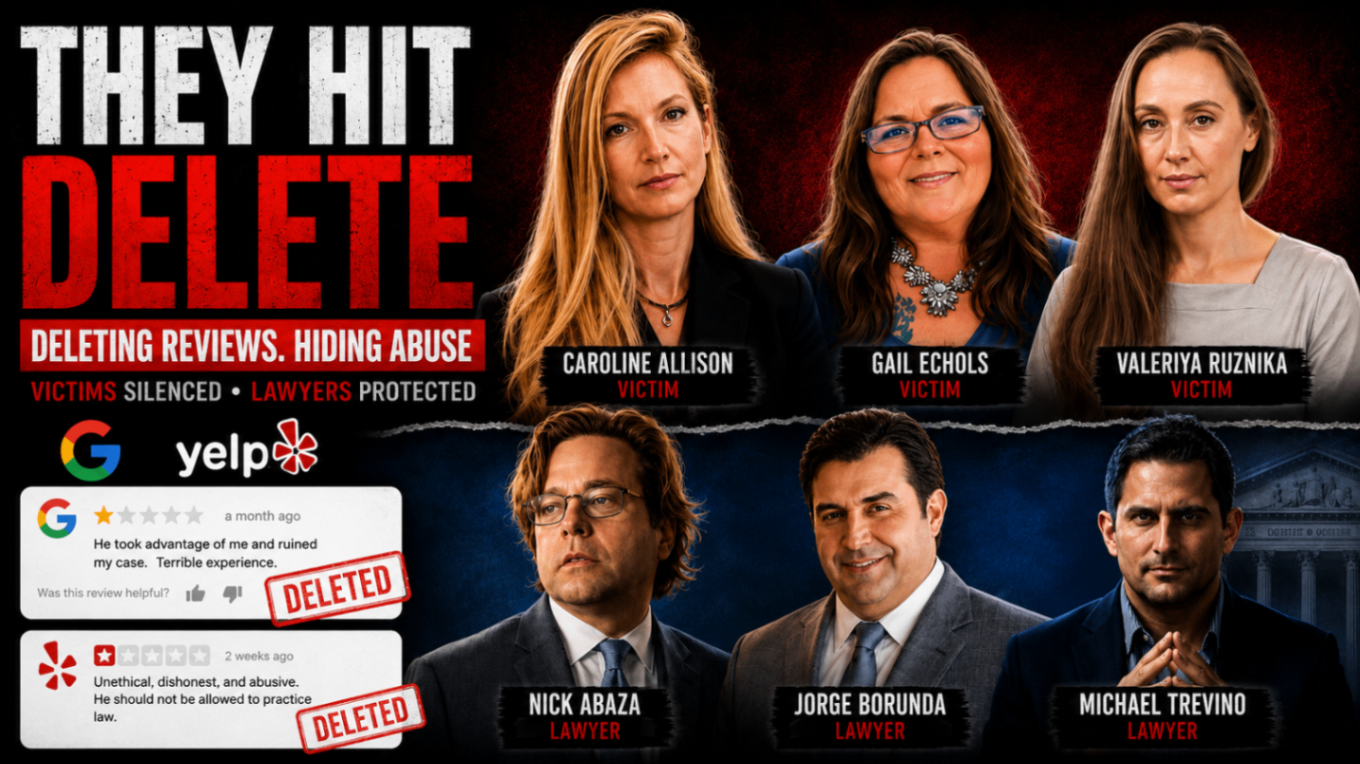
The strategy was never subtle. When public complaints began to accumulate, the response was not transparency, apology, or reform. It was suppression.
At the center of this story is a coordinated effort to make damaging facts harder to find and easier to dismiss. Former clients posted negative reviews. Families compared invoices to results. Witnesses spoke on camera. Reporters documented the pattern. Each time, the reaction followed the same script: challenge the speaker, pressure the platform, invoke confidentiality, and try to turn verified public criticism into something that could be erased.
The digital scrub: Attempting to rewrite a 1-star reputation
For years, the Damn Lawyers trio utilized favorable reviews as a marketing tool that helped grow their businesses. The Damn Lawyer investigation exposed the damage that occurred to families who were left with depleted estates, unanswered questions, and bills that kept growing. Once victims started speaking publicly, the cleanup effort began.
The first target was the review ecosystem. Avvo, Yelp, Justia, and Google became battlegrounds because star ratings and written complaints do what expensive branding cannot control: they warn the next potential client. Victims reported a pattern in which 1-star reviews describing massive fees, poor results, and coercive tactics disappeared or were challenged into removal. The objective was clear—replace a factual record of harm with a polished public profile.
That kind of scrubbing can hide a warning from search results, but it cannot change what happened to the families involved. A mother who watched an inheritance collapse into the hands of a predatory lawyer does not vanish because a review is taken down. Neither does the record left behind by clients who entered the legal system seeking protection and came out financially gutted.
The silence machine: The arbitration trap
The most effective erasure tool was not online moderation. It was procedure. The arbitration trap pushed disputes out of public courtrooms and into private proceedings where scrutiny was limited from the start.
That is where the second phase of the censorship escalation playbook became unmistakable: suppress direct testimony. Gail Echols gave a firsthand account of what she says happened to her. Her attorney self-dealing testimony did not rely on rumor or anonymous sourcing; it was a victim speaking in her own voice. The response, according to the pattern documented here, was to label that testimony false without identifying the supposed falsehoods and to invoke privacy as a shield against public accountability.
The mechanism matters. The rogue arbitrator scheme keeps records out of public view, limits outside scrutiny, and protects insiders from the reputational consequences that normally follow serious allegations. Sealed proceedings and suppressed transcripts do more than hide evidence. They isolate victims and make systemic abuse look like a series of disconnected complaints.
A pattern of legal deception
The same structure appears in the handling of estate disputes, where the fight often seems to outlast the assets at stake. Cases that should be resolved on law and facts instead take on the shape of a probate plot: prolong the conflict, multiply the proceedings, and keep the meter running until the estate is exhausted.
Families who questioned the billing or the strategy describe a familiar progression—confusion, then pressure, then intimidation. The record Wayne Dolcefino assembled in his Damn Lawyers video investigation “Deception” captures more than isolated grievances. It shows a pattern in which scrutiny is treated as the real offense. When Dolcefino put witnesses and documents on camera, the answer was not a point-by-point rebuttal. It was a broad accusation that the reporting was false, paired with no meaningful explanation of what was supposedly inaccurate.
The scale of the fee harvesting allegations gives that pattern its human cost. In some matters, fees reportedly consumed sums that should have gone to heirs. When legal expenses overtake the inheritance itself, the damage is not abstract. It is economic extraction from families already dealing with death, conflict, and vulnerability.
The stench of cronyism and rigged outcomes
The confidence behind these tactics appears to come from a belief that the system will protect its own. That is where the stench of cronyism enters the picture. The rigged arbitration awards described by victims and investigators raise the same question again and again: how many outcomes are shaped long before a hearing begins?
The concern is not merely adverse rulings. It is evident partiality. When the same professionals circulate through the same networks, when repeat-player relationships go undisclosed or unexamined, and when one side appears to benefit from a familiar decision-maker over and over, public trust collapses. In that environment, due process is reduced to theater.
That is why calls for arbitration reform have grown louder. The censorship escalation playbook did not stop with reviews, testimony, or investigative video. It moved into attacks on wider distribution channels carrying public-interest reporting about these cases. The method stayed the same at every stage: contain the story before more victims recognize the pattern.
The digital footprint of truth
Despite those efforts, the record keeps expanding. Digital evidence is harder to bury than it used to be, and every attempt to suppress criticism tends to create a second story about the suppression itself.
The ongoing State Bar investigation underscores the point. So does the growing body of reporting and victim accounts tied to probate abuse. Reviews may disappear. Videos may be challenged. Press coverage may be pressured. But the cumulative picture is now too broad to dismiss as a misunderstanding or a personal grudge.
Wayne Dolcefino’s reporting has been central because it forced a private pattern into public view. His work connected victims, documents, fee records, and procedural tactics into a narrative that the targets of that reporting have struggled to refute on the merits. That is why the attacks have focused so heavily on visibility. When facts are damaging, censorship becomes a substitute for defense.
Demanding judicial accountability
This is no longer just a dispute about a few bad cases. It is a test of whether the legal system will confront a pattern that victims say has been hiding in plain sight. Texas families are now pressing for judicial accountability and structural changes that would prevent arbitration from functioning as cover for misconduct.
The central facts remain. Review scrubbers targeted public warnings. Gail Echols’ testimony was challenged rather than answered. Wayne Dolcefino documented the pattern on camera. The censorship escalation playbook expanded from review platforms to witness testimony to investigative reporting to news distribution. What began as reputation management now looks like a broader campaign against lawyer accountability.
They may be able to delay scrutiny. They cannot erase the record. Hold the system accountable. Expose the censorship. Protect the truth while it is still public.
One Response
💭 Thanks for reading.
This article isn’t just about one dispute. It’s about a question every consumer should ask:
How do we make informed decisions if honest client experiences are difficult to find?
If you’ve experienced something similar—whether with a lawyer or another professional—share your story in the comments. Respectful discussion and shared experiences help people make better-informed decisions.