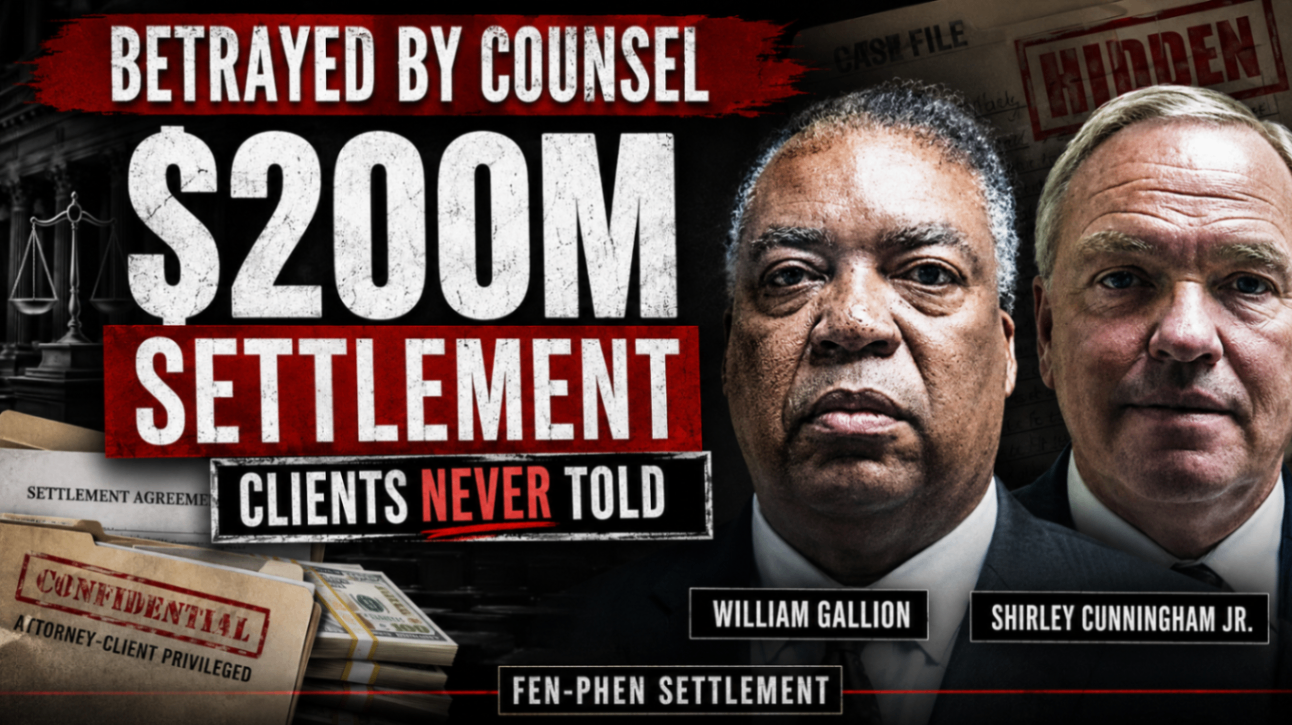
The courtroom was quiet, but the air was thick with the scent of a different kind of disaster. It wasn’t the kind caused by the diet drug Fen-Phen, which had already left hundreds of Kentuckians with scarred hearts and failing lungs. This was the stench of a betrayal so deep it would eventually send two of the state’s most prominent attorneys to federal prison for decades.
William Gallion and Shirley Cunningham Jr. didn’t just win a case; they orchestrated a heist. While their clients: people who had trusted them with their lives and their futures: waited for a sense of justice, these predatory lawyers were busy counting a $200 million secret.
The story of the Fen-Phen settlement is a masterclass in how the legal system can be weaponized against the very people it is supposed to protect. It is a cautionary tale for anyone facing a mass tort or a probate battle today, proving that when transparency dies, legal bullying begins.
The $200 Million Secret
In 2001, Gallion and Cunningham represented over 400 clients who had been physically devastated by the diet drug Fen-Phen. They reached a global settlement with American Home Products for approximately $200.45 million. Under the law and their own contracts, the attorneys were entitled to a significant cut: roughly $60 million in fees.
But for these men, $60 million wasn’t enough. They wanted it all.
Instead of disclosing the massive $200 million total to their clients, they went from person to person with “confidential settlement” forms. They handed out checks for individual amounts, never mentioning the mountain of cash sitting in an escrow account. They didn’t just hide the money; they used fear as a silencer. Prosecutors later revealed that the lawyers warned their own clients not to speak a word about their payments, even suggesting that talking about the settlement could lead to imprisonment.
This level of attorney self-dealing is exactly what investigative journalist Wayne Dolcefino has been exposing in modern cases. Whether it’s a mass tort in Kentucky or a rigged probate hearing in Texas, the playbook remains the same: keep the client in the dark, inflate the fees, and use intimidation to keep the truth from coming out.
The Sham Charity and the $5,300 Monthly Kickback
When a bar investigation finally started sniffing around the edges of their scheme, Gallion and Cunningham didn’t come clean. Instead, they doubled down. They created a non-profit organization called the “Kentucky Fund for Healthy Living.”
They told their clients that any “leftover” money from the settlement would be donated to this noble cause. In reality, the fund was a shell. It existed primarily to pay Gallion and Cunningham $5,300 per month each as directors. They were effectively laundering their clients’ settlement money back into their own pockets through a “charity.”
This is the peak of contingency fee abuse. It shows a complete disregard for the fiduciary duty a lawyer owes a client. While their clients were struggling with medical bills and long-term health complications, the lawyers were living the high life on money that should have been used for heart valves and hospital stays.

The Stench of Cronyism in the Courtroom
One of the most disturbing aspects of the Gallion and Cunningham case was how they managed to keep the scheme hidden for so long. It required a system that prioritized the “brotherhood” of the bar over the rights of the individual.
In many ways, they were the spiritual predecessors to the “Damn Lawyers” featured in the Dolcefino investigation: attorneys like Nick Abaza, Jorge Borunda, and Michael Trevino. When lawyers operate in a system where they aren’t held accountable, where bar complaint filings go ignored or reviews are manipulated, the public stands no chance.
The Fen-Phen scandal only broke because the greed became too large to hide. By the time the federal government stepped in, the lawyers had already pocketed tens of millions more than they were owed. They had treated a $200 million settlement fund like a personal ATM, leaving their clients with a fraction of what they deserved.
From Kentucky to Texas: The Systemic Failure
While the Fen-Phen case took place in Kentucky, the lessons are universal. We see the same patterns of inheritance theft and exploitation in probate courts across the country today. Whether it’s a mass settlement or an estate dispute, the lack of transparency is the common denominator.
The problem is systemic. When cases are pushed into the shadows, whether through confidential settlements or arbitration corruption, the lawyers win and the clients lose. In the Kentucky case, the lawyers were eventually caught and sentenced to 25 and 20 years in federal prison. But how many others are currently getting away with similar tactics because their victims are too afraid to speak up?
We are seeing a growing demand for arbitration reform. The current system allows lawyers to operate behind closed doors, away from the prying eyes of a jury or the public record. This is exactly where predators like Gallion and Cunningham thrive.
The Need for Legislative Action
The Fen-Phen victims eventually got a measure of justice, but it took years of federal investigation and a high-stakes criminal trial to bring it home. Most victims of probate abuse don’t have the resources to fight a decade-long battle against a law firm with deep pockets.
We need real fee harvesting protections and legislative changes that mandate absolute transparency in aggregate settlements. If a lawyer settles a case for hundreds of millions of dollars, every single client should know the total amount on the table. There should be no “confidential” numbers between a lawyer and their own client.
The “Damn Lawyers” featured in the Dolcefino investigation thrive because they count on your silence. They count on the fact that you don’t know your rights, and they use the complexity of the law to keep you from asking questions.
Final Word: Stop the Bullying
William Gallion and Shirley Cunningham are currently serving their time, a rare instance where the system actually held its own accountable. But their story isn’t just an outlier; it’s a warning. It’s proof that without aggressive oversight and a commitment to exposing the truth, the legal profession can become a playground for the greedy.
At Stop Legal Bullying, we believe the only way to fix a broken system is to shine a light into its darkest corners. We will continue to name the names of those who exploit their clients and push for the legislative reforms that will prevent the next $200 million betrayal.
Don’t let them hide behind their suits and their secret settlements. If you have been a victim of attorney misconduct, your voice is the most powerful weapon we have. It’s time to demand accountability and end the stench of cronyism for good.