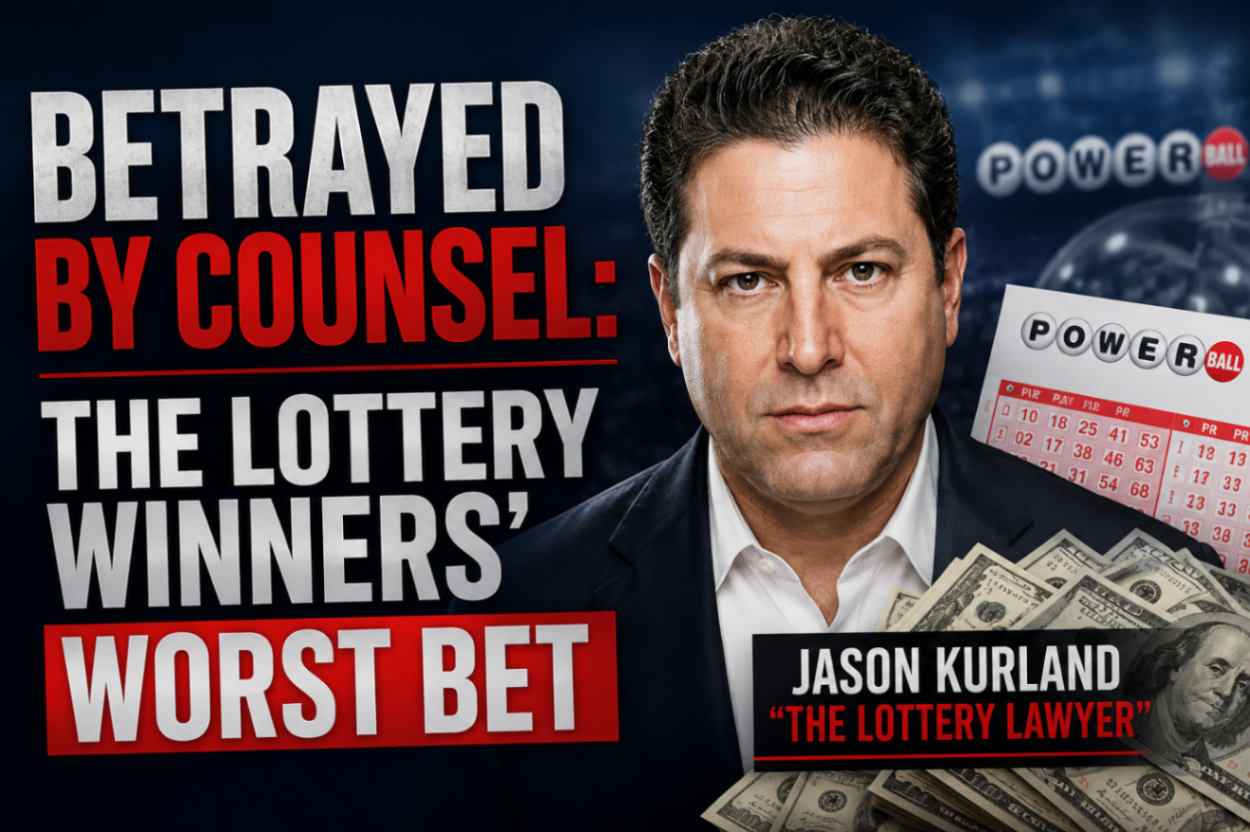
For a brief, shimmering moment, the nightmare of financial insecurity vanished. The numbers on the ticket matched the glowing screen. A $1.5 billion Mega Millions jackpot. A $245 million Powerball. A $150 million windfall. For the winners, it wasn’t just money; it was the ultimate shield against a world that usually takes more than it gives. But the greatest threat to their new-found security wasn’t a long-lost relative or a tax collector. It was the man they hired to protect them.
Jason Kurland didn’t just walk into their lives; he marketed his way in. He was the self-styled “Lottery Lawyer,” a niche legal brand that promised specialized protection for the vulnerable overnight-wealthy. In reality, that brand wasn’t a promise of safety. It was a hunting license. By the time federal investigators closed in, Kurland had orchestrated a scheme that stole or misappropriated more than $100 million from his clients.
The predator behind the brand
Sudden wealth creates a unique form of isolation. Winners are often advised to hide, to change their phone numbers, and: crucially: to find a lawyer they can trust. Kurland capitalized on this fear. He positioned himself as the elite gatekeeper who understood the unique pressures of the jackpot life. He promised to fend off the grifters and the “sharks” of the world, all while he was quietly legal bullying his own clients into a financial abyss.
The mechanics of the betrayal were as clinical as they were devastating. Once Kurland gained the trust of these winners, he began steering their massive settlements into high-risk investments. What he didn’t tell them was that these businesses were often controlled by his own associates or entities he secretly owned. It was a classic case of attorney self-dealing on a scale that few could imagine.
The scheme relied on the victims’ lack of financial sophistication. These weren’t hedge fund managers; they were regular people who had won a cosmic game of chance. They relied on their counsel to act as their fiduciary. Instead, Kurland used their bank accounts as a personal slush fund, taking millions in undisclosed kickbacks from the very companies he “advised” his clients to invest in.
High stakes and hidden kickbacks
In the world of high-stakes legal practice, the line between aggressive advocacy and predatory lawyers is often blurred by a lack of transparency. Kurland operated in the shadows of the attorney-client privilege, using it as a cloak for his crimes. He didn’t just offer bad advice; he actively participated in the theft of $19.5 million directly from one victim’s account to fund a Ponzi-style operation.
This pattern of behavior is not an isolated incident. It is a symptom of a judicial system that often fails to police its own. Investigative journalist Wayne Dolcefino has frequently highlighted similar tactics in his work, exposing how the “the Damn Lawyers featured in the Dolcefino investigation” operate with a sense of impunity. Whether it is a lottery winner in New York or a family caught in a probate dispute in Texas, the playbook remains the same: isolate the victim, manufacture a complex financial web, and harvest the fees.
The “the Damn Lawyers” often rely on the fact that their victims feel powerless to fight back. When a lawyer: the person the state has licensed to represent the law: turns against you, where do you turn? For Kurland’s victims, the betrayal meant that the winning ticket they thought would secure their family’s future for generations became a ticket to a federal investigation and millions in losses.
The stench of cronyism and system failure
How does a lawyer misappropriate $100 million before anyone notices? The answer lies in the “stench of cronyism” that pervades many legal circles. Regulators and bar associations are often slow to act, preferring to protect the reputation of the profession rather than the safety of the public. This lack of oversight is what allows fee harvesting to flourish under the guise of legitimate legal services.
In many jurisdictions, the legal system has become a machine for exploitation rather than a pursuit of justice. We see this in the way arbitration corruption is allowed to hide misconduct behind closed doors. When disputes between lawyers and their clients are forced into private arbitration, the public never hears the truth. There are no public records, no accountability, and no deterrent for the next predator waiting in the wings.
The Kurland case, while extreme in its dollar amount, is fundamentally about the same probate abuse and fiduciary betrayal we see every day. It’s about the vulnerability of those who have something worth taking. Whether it’s a lottery jackpot or a family inheritance, the predators in suits are always watching, ready to strike when the guard is down.
Breaking the arbitration trap
The 13-year prison sentence handed down to Jason Kurland in 2023 was a rare moment of accountability. But for every Kurland behind bars, there are dozens of others who use more subtle forms of contingency fee abuse to drain their clients’ resources legally. They hide behind complicated contracts and mandatory arbitration clauses that prevent victims from ever seeing the inside of a courtroom.
We must demand systemic reform to prevent these “lottery lawyers” and probate victims from being created in the first place. This starts with requiring that all legal arbitration be subject to judicial review. The era of secret justice must end. When a lawyer is accused of stealing from their client, that evidence should be public, and the consequences should be swift.
Legislative solutions are the only way to break the cycle of inheritance theft and attorney misconduct. We need laws that mandate total transparency in attorney-client financial transactions and that strengthen the power of victims to file bar complaint filings without fear of retaliation or suppression.
Justice requires transparency
The story of the “Lottery Lawyer” is a cautionary tale for anyone entering the legal system. It is a reminder that a license to practice law is not a certificate of character. The victims in the Kurland case lost more than just money; they lost their peace of mind and their faith in the justice system.
We are calling for a national legislative debate on attorney accountability. Families across the country are demanding legislative reforms to ensure that the “the Damn Lawyers” can no longer hide behind their titles. If you or someone you know has been a victim of unethical legal practices, now is the time to speak up.
Don’t wait for the next scandal to break. Check the Google reviews and professional records of those you hire. Support arbitration reform that restores the right to a public trial. Together, we can expose the truth and ensure that the legal system serves the people, not the profiteers.
For those already ensnared in the web of unethical attorneys, you are not alone. Visit the victims of Anne Ashby portal to see how others are fighting back and reclaiming their voices against the machinery of legal bullying.