A court order meant to protect someone should not become a blank check to control their life. That is the accountability problem at the center of Nina A. Kohn’s guardianship reform work: how to provide help without handing another person unnecessary power.
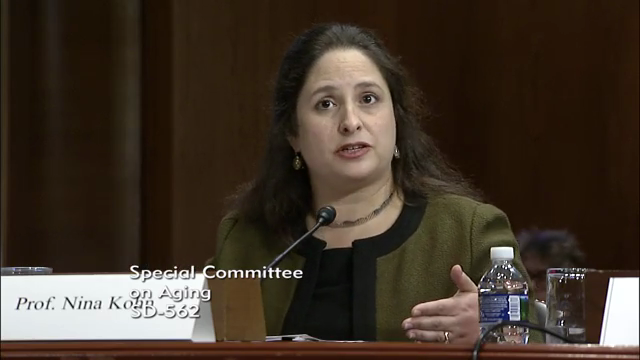
For this week’s Heroes of Reform, we return to Kohn’s April 18, 2018 appearance before the U.S. Senate Special Committee on Aging. This is a look back at documented work, not a new hearing or a claim that guardianship abuse has been solved.
The power that needs limits
In her written testimony, Kohn identified four failures: unnecessary guardianships, excessive restrictions, violations of the person’s rights, and rules that can encourage those outcomes. She described a procedural imbalance: asking for broad authority could be easier than identifying the particular decisions for which someone actually needed assistance.
Her proposed safeguards included clearer duties, stronger monitoring and alternatives that preserve decision-making wherever adequate protection is possible. She also argued that fees should reflect the services actually provided. A lawyer acting as guardian should not generally collect a lawyer’s hourly rate for an ordinary nonlegal task.
That distinction matters to this blog’s coverage of the probate fee machine. A professional title does not, by itself, explain a bill. Meaningful scrutiny asks what was done, why it was needed and whose interests it served. The linked article supplies separate campaign context; it is not evidence about Kohn or a finding involving anyone at the hearing.
Our separate discussion of alleged fee harvesting also asks whether financial incentives can pull legal work away from a family’s interests. Kohn’s testimony supplies a concrete question for guardianship oversight: does the charge match the task actually performed?
Putting safeguards into a model law
Kohn served as Reporter for the Uniform Guardianship, Conservatorship, and Other Protective Arrangements Act. In an April 27, 2018 Senate Committee article, then-chair Susan Collins highlighted Kohn’s contribution and described the model’s emphasis on limited authority, clearer responsibilities and scrutiny of guardian fees. Collins also stressed that guardianship rules are set by states and differ across the country.
Those details make this a reform story. The work addresses how legal authority can become excessive and how financial control should be supervised. It offers specific standards against which to judge a system’s promises.
A protective label should not end the inquiry. If an arrangement is described as necessary, the next question is necessary for which decisions. If a payment is described as reasonable, the next question is what work supports it. Those are accountability questions, not accusations against every guardian or every lawyer.
Reform is collaborative work
Here, “Reporter” means a legal drafting role, not a newspaper job. Syracuse University’s July 2, 2025 account describes Kohn’s work with the Uniform Law Commission as a process of reconciling viewpoints and editing a workable model. She did not write it alone. The university identifies her as Reporter for two uniform acts, including the guardianship measure, and explains that states can adapt the model to their own needs.
That is less visible than a courtroom confrontation, but it deserves attention. A reformer has to turn a criticism into something legislators can evaluate and courts can apply. The difficult questions do not disappear when people agree that abuse is wrong: who holds authority, how it is bounded, and what happens when a safeguard fails still need answers.
Our coverage of Robin’s Law reflects a related interest in proposed protections for families. It is a separate reform effort, not Kohn’s legislation. Keeping those efforts distinct helps readers assess what each actually proposes.
For families choosing representation in an estate matter, our probate-lawyer hiring guide raises practical questions about engagement terms. That campaign resource is distinct from Kohn’s model-law work and does not establish the safeguards available in any particular guardianship.
A standard to ask about, not a promise
A uniform act is model legislation. It does not automatically become the law in every state, and drafting a safeguard does not prove that every court enforces it. Readers facing a current proceeding need advice based on their state’s law and the actual order in their case.
Kohn’s testimony also addressed a person’s ability to seek modification or termination of an order and obtain counsel to pursue restoration of rights. That adds an essential question to any discussion of protection: how can the person regain control when the arrangement is no longer needed?
For readers following our lawyer accountability campaign, this is the useful connection: legal authority should come with understandable duties and a meaningful way to question its use. The campaign video is separate from Kohn’s work; linking it does not imply her endorsement.
Dolcefino’s account of the Allison family probate case documents a separate family’s allegations about legal advice and fees. It explains part of this campaign’s concern about oversight; it is not a case involving Kohn.
Related campaign resources
Reform proposals should be tested against the practical questions families raise. The campaign’s published filings include questions about how fees accumulate. Another examines advice about continuing litigation. A third concerns the terms of representation. These are separate allegations, not disciplinary findings.
Other submissions ask what clients knew about professional connections when choosing a lawyer. They also raise questions about independent representation during estate administration. A further account concerns understanding a fee agreement before signing.
The record concerning an arbitrator’s disclosures raises a different part of the accountability question. Each filing needs to be read alongside its supporting materials and any response or decision. These campaign records do not establish facts about Kohn’s work, and they imply no endorsement by the people or institutions discussed in this article.
Stop Legal Bullying maintains Damn Lawyers for its broader accountability campaign, the court-accountability resources, and resources for probate abuse victims. These are separate campaign materials, not allegations involving Kohn or proof of claims about her.
Image: Nina A. Kohn at the April 18, 2018 Senate Special Committee on Aging hearing, from the committee’s official recording. This unaltered hearing frame has no added headline or generated imagery.