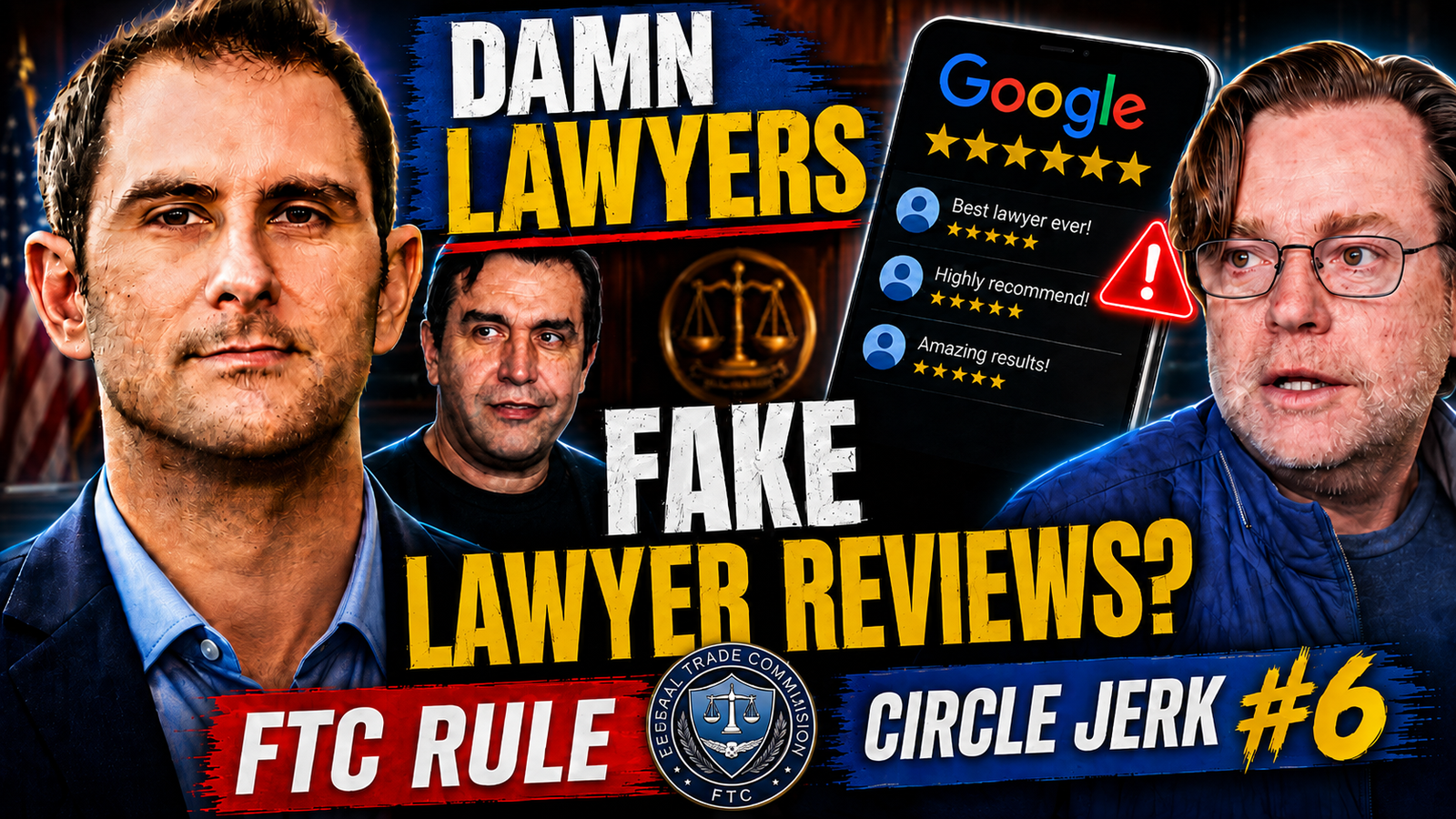
A new Consumer Alert from Stop Legal Bullying Now LLC says a new Dolcefino Media video, Circle Jerk, is examining alleged review manipulation involving three Houston probate attorneys. According to the press release, the underlying complaints reportedly allege undisclosed favorable reviews, alleged deletion or suppression of negative reviews, and a broader concern that consumers may be seeing a distorted picture of public feedback when choosing probate counsel.
Circle Jerk is part of the Damn Lawyers investigation led by Wayne Dolcefino. No official video URL was supplied, so this article does not embed or link to the release. This post is based on the August 14, 2026 Consumer Alert and the reporting it describes.
Those allegations remain allegations. The complaints described in the press release are not FTC findings, court findings, or disciplinary findings. Whether any review was fake, conflicted, improperly removed, or otherwise misleading would depend on evidence and on the separate processes used by regulators, courts, review platforms, or professional authorities.
Circle Jerk and the review game
The new video reportedly focuses on what consumer advocates often call the review game: the way online ratings can influence high-stakes decisions long before a family understands the underlying facts. In probate matters, that concern carries unusual weight. Families may be grieving, facing inheritance disputes, or scrambling to protect property, and a polished five-star profile can shape who gets the first phone call.
According to the Consumer Alert, Circle Jerk examines allegations that some positive reviews may not have been fully disclosed and that some negative reviews from actual dissatisfied clients may have been deleted, suppressed, or made less visible. If true, that kind of review manipulation could create what critics describe as rating laundering: an online reputation that appears cleaner, broader, or more trustworthy than the underlying record would justify.
That point should be handled carefully. A missing review is not automatic proof of misconduct. Platforms can remove content for many legitimate reasons, including privacy concerns, harassment, irrelevance, impersonation, or other policy violations. The issue raised by the video is narrower and more practical: whether consumers are being presented with a fair snapshot of real client experiences when they are deciding whom to trust with an estate fight.
Stop Legal Bullying has previously examined fake five-star reviews and related concerns about lawyer accountability. Circle Jerk reportedly brings that warning into the probate context, where a strong online rating may carry outsized influence with families under pressure.
Why online reputation matters in probate
Probate clients are not shopping for a routine consumer product. They may be choosing counsel while managing grief, family conflict, deadlines, fee concerns, trust administration issues, or threats of litigation. In that environment, review fraud, google review fraud, and other forms of review manipulation can matter because online reputation may become a stand-in for deeper due diligence.
The concern described in Circle Jerk is not simply whether one review is inaccurate. It is whether a pattern of alleged fake 5-star reviews, undisclosed insider praise, or selective disappearance of criticism could distort the consumer’s first impression. When that happens, families may believe they are seeing an honest consensus when they may actually be seeing only the most favorable slice of the story. Stop Legal Bullying has described that broader consumer-risk dynamic as The Five-Star Illusion.
Why this matters
The Consumer Alert references the FTC’s Consumer Review Rule, 16 C.F.R. Part 465, along with Texas Ethics Opinion 685 and Texas Rules 7.01 and 8.04(a)(3), as background for why alleged review fraud and review manipulation deserve scrutiny. Those authorities generally address misleading reviews, undisclosed insider endorsements, and deceptive communications, but they do not establish that any particular complaint has been proven.
What the FTC complaint packages put before regulators
The complaint packages discussed here are submissions by Caroline Allison to the Federal Trade Commission and other platforms. They were submitted to regulators, and the FTC has not necessarily adopted, verified, or adjudicated the allegations. They are not FTC findings, court judgments, or disciplinary orders. Any regulator reviewing them would still have to independently assess jurisdiction, evidence, causation, and whether any alleged conduct violated the Consumer Review Rule or another law.
The three complaint packages discussed in this article were submitted regarding alleged review practices associated with Jorge Borunda, Nick Abaza, and Michael Trevino. The names identify the subjects of the respective submissions; they do not represent an FTC finding, court judgment, or disciplinary finding.
The first complaint package: review activity, cross-reviews, and alleged suppression
The FTC complaint package concerning Jorge Borunda describes what the complainant characterizes as an alleged burst of favorable reviews, alleged reviews by people with personal or professional connections, alleged cross-reviewing between lawyers or affiliated businesses, and alleged removal or reduced visibility of unfavorable reviews. According to the submitted materials, the complainant asks regulators to examine screenshots, reviewer profiles, dates, platform messages, and platform responses to determine whether consumers were shown a distorted picture of public feedback.
The second complaint package: reviewer pressure and undisclosed relationships
The FTC complaint package concerning Nick Abaza alleges reviewer intimidation or pressure, undisclosed relationships behind endorsements, self-review or cross-review activity, allegedly misleading profile presentation, and disputes involving reviews on multiple platforms. The complainant-submitted materials identify screenshots, messages, platform correspondence, and account activity that the complainant asks regulators to evaluate. Those materials remain allegations unless and until an agency, court, or other competent authority makes findings based on an independent review.
The third complaint package: professional-network reviews and missing client feedback
The FTC complaint package concerning Michael Trevino alleges a favorable review from a professional connection, an account the complainant links to a shared professional network, and a former client’s report that a review became unavailable or had to be reposted. The package asks regulators to examine whether consumers may have been given a misleading impression of independent client approval. As with the other submissions, those claims are part of a complainant-assembled record and not proof of a legal violation.
What these complaints do—and do not—show
Together, the packages present a documented record of what the complainant says she observed, saved, and submitted. They do not establish that a review was fake, that a platform unlawfully suppressed criticism, or that any lawyer violated the FTC Act. Those conclusions would require an independent investigation and applicable legal findings. The useful public question is whether a prospective client can distinguish an independent client review from an insider endorsement, and whether platforms preserve a fair audit trail when reviews are challenged or removed.

The campaign context behind Circle Jerk
The complaints described in the Consumer Alert are tied to the broader Allison family probate dispute and to the larger Damn Lawyers investigation. The press release describes contested allegations involving legal fees, inheritance issues, malpractice claims, arbitration, reputation management, and what critics describe as fee harvesting. Those matters remain contested, and the review allegations should not be treated as proof of the underlying probate claims.
Wayne Dolcefino is identified in the release as the lead investigator behind the Damn Lawyers investigation. In that context, Circle Jerk reportedly serves as a consumer-warning installment within investigative and advocacy reporting about how online reputation can affect legal hiring decisions before families have the benefit of discovery, sworn testimony, or a full public record.
What Houston probate consumers should take from the complaints
The practical value of these complaint packages is not that they resolve disputed facts. It is that they show how easily review fraud, review manipulation, and missing context can affect a family’s first impression of legal counsel. Houston probate consumers should not rely on stars alone. Inspect reviewer history and disclosures. Ask for written fees and material relationships. Preserve screenshots and URLs. Compare platforms. Ask who controls a firm’s profile. Report suspected manipulation to the platform or appropriate regulator.
If you have documented information relevant to this investigation, contact Stop Legal Bullying at stoplegalbullying@gmail.com.
Circle Jerk raises a larger accountability question
The new Dolcefino Media release places alleged review manipulation inside a broader lawyer accountability debate. If favorable reviews are undisclosed, if negative reviews are allegedly suppressed, or if online profiles create a misleading sense of consensus, families may be making probate decisions on incomplete information. That is the consumer-warning concern at the center of Circle Jerk.
The allegations discussed here are still allegations, and the underlying complaints are not agency findings. But the questions raised by Circle Jerk deserve scrutiny because online reputation can steer vulnerable families toward or away from legal counsel at the moment they are least equipped to test marketing claims for themselves.
Stop Legal Bullying calls for transparent investigation, fair procedures, and meaningful accountability when credible evidence suggests consumers may have been misled. If Circle Jerk prompts families to look harder at review fraud, fake 5-star reviews, review manipulation, and the visible record behind a lawyer’s reputation, it will have performed a public service. Accountability starts with making the review game harder to hide.