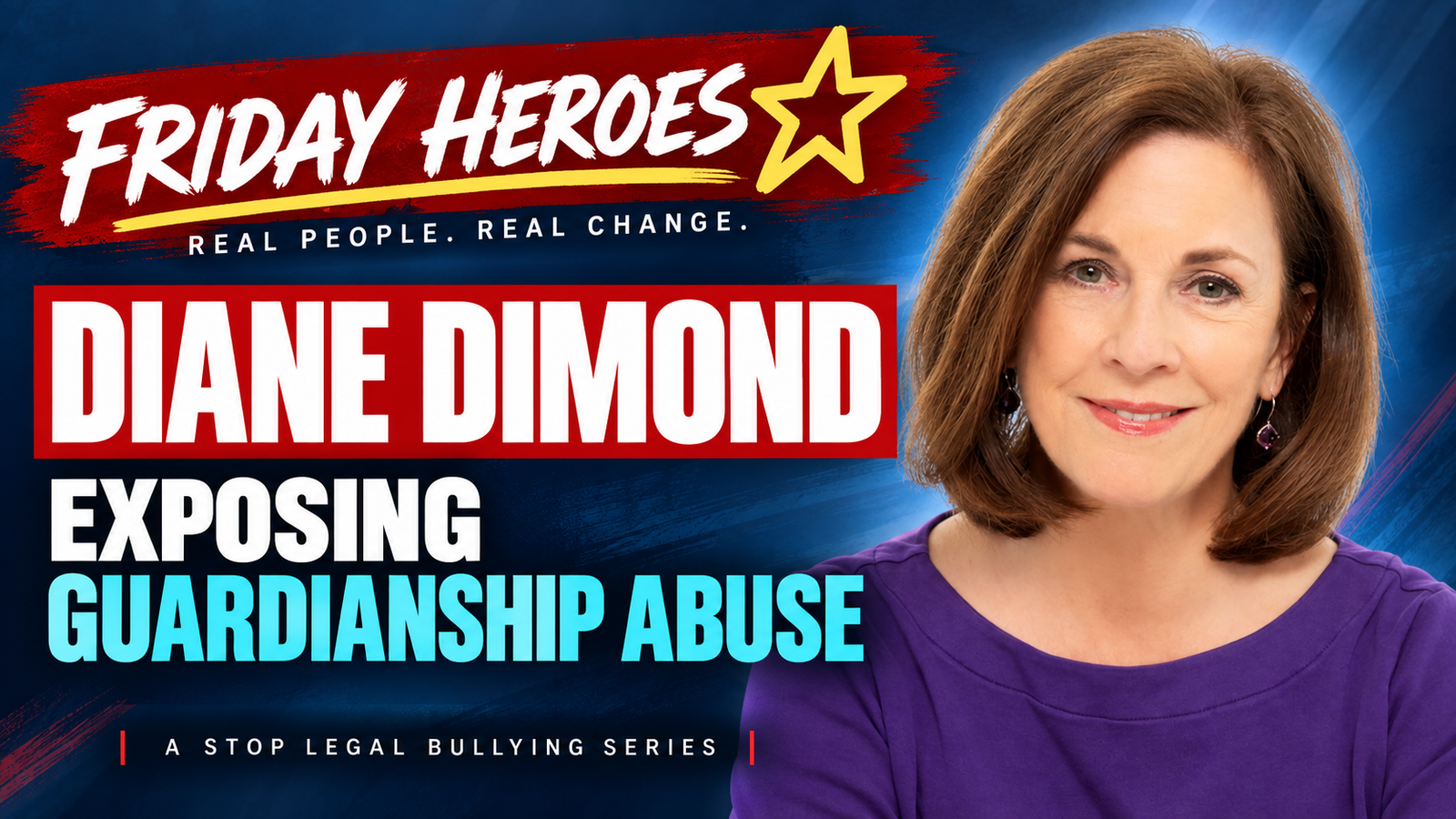
Friday Heroes of Reform
When a court appoints someone to protect an adult, that appointment can put another person in control of savings, housing and everyday choices. Diane Dimond has spent years asking a question that families caught in abusive guardianships know well: who watches the people given that power?
Her investigations follow money disappearing under court-appointed management, families struggling to be heard, and oversight that can fail the people it is supposed to protect. Readers following this site’s accounts from probate victims will recognize the concern. The proceedings and people differ, but the need to examine how legal power is used runs through both.
Following the families’ accounts
According to her published biography, Dimond began examining guardianship in 2015. Her media kit describes early leads from people worried about relatives placed under guardianship. Those calls led her into a subject she would continue reporting on for years.
Her six-part Albuquerque Journal series, “Who Guards the Guardians?”, appeared in late 2016. In September 2023, Brandeis University Press published her book, We’re Here to Help: When Guardianship Goes Wrong, drawing together more than eight years of investigation, according to her biography.
A family’s first account can raise an urgent concern. Reporting has to go further: examine the appointment, trace the money and identify whose decisions are being challenged. Our separate Texas coverage of alleged fee harvesting asks readers to scrutinize legal bills and financial incentives. That coverage is not evidence about any particular case investigated by Dimond.
Protection carries a duty
The Department of Justice’s guardianship guidance explains that guardians are fiduciaries. They owe duties to the person they serve and to the court, and must put that person’s interests above their own. Guardianship can affect major personal and financial decisions. The powers granted and procedures for challenging problems depend on state law and the court’s order.
An appointment is not proof of abuse. Nor does a court order make every later decision beyond scrutiny. Who reviews the accounts? Are fees explained? Can the person under guardianship participate in decisions affecting their life? Those questions also run through this site’s examination of the probate fee machine and the financial pressures families describe.
In report GAO-17-33, published in 2016, the Government Accountability Office found that the national extent of guardian abuse was unknown because data were limited. It examined selected closed cases and described screening, education, monitoring and enforcement as ways to prevent or address abuse. These are historical findings, not a current count of victims.
What accountability can look like
The Ayudando Guardians prosecution in New Mexico provides a documented example of financial exploitation and consequences. A July 17, 2025 announcement from the U.S. Attorney’s Office records prison sentences for the company’s former leaders and associates, and $4.9 million recovered for victims through a settlement and asset forfeiture.
That recovery satisfied only part of a $6.8 million money judgment. It does not show that every victim recovered every loss. The case supplies independent evidence of why oversight matters; we are not attributing the prosecution or recovery to Dimond.
Dimond’s published reform proposals call for stronger screening of guardians, meaningful financial scrutiny and resources to enforce protections. These are measures she advocates, rather than a claim that every jurisdiction has adopted them. Her reporting and resources archive collects published work and organizations focused on guardianship concerns.
Reform also requires asking what a proposal would change and how it would be enforced. In our separate Texas advocacy, Robin’s Law is presented as a proposal concerning probate fees and attorney accountability. It should not be confused with enacted law or credited to Dimond.
Following the money and demanding answers
Our earlier reform-voices roundup introduced Dimond among people examining failures in the legal system. Her contribution is sustained reporting on the use of court-appointed power, including what can happen when control over a person’s life comes with control over their money.
The Damn Lawyers investigation follows a separate Texas dispute. Its reporting on the Allison family probate case and the probate plot examines allegations about attorney fees and the handling of an estate. Those allegations belong to their own record; they are not findings about Dimond or the people in her reporting.
Caroline’s discussion of bar complaints and attorney misconduct questions how the profession handles grievances. A complaint itself does not establish misconduct. Our coverage of the arbitration trap examines a different accountability problem: disputes over the process used to challenge lawyers. The campaign’s court-accountability resources collects related allegations and accounts.
Dimond’s work earns attention because she has kept returning to families’ concerns and the institutions responsible for protecting them. For readers following legal abuse, the practical demand is straightforward: examine the records, question unexplained charges and insist on answers from those entrusted with another person’s welfare.
Questions behind the campaign records
Financial oversight depends on records that can be questioned. The campaign’s published filings include questions about how fees accumulate. Another examines advice about continuing litigation. A third concerns the terms of representation. These are separate allegations, not disciplinary findings.
Other submissions ask what clients knew about professional connections when choosing a lawyer. They also raise questions about independent representation during estate administration. A further account concerns understanding a fee agreement before signing.
The record concerning an arbitrator’s disclosures raises a different part of the accountability question. Each filing needs to be read alongside its supporting materials and any response or decision. These campaign records do not establish facts about Dimond’s reporting, and they imply no endorsement by the people or institutions discussed in this article.
Thumbnail: editorial composite based on a portrait supplied through Diane Dimond’s official media room; AI-assisted layout.